
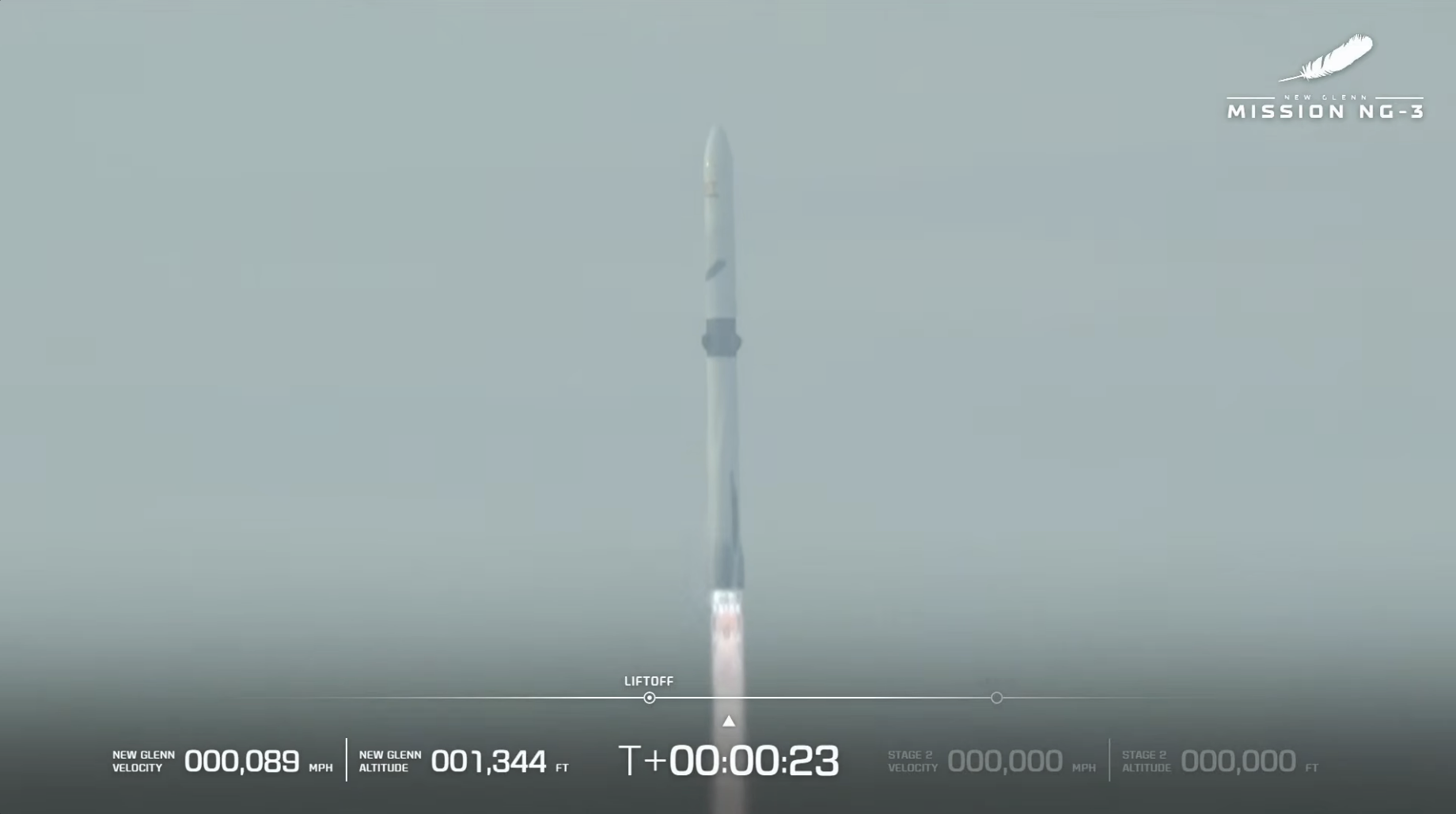
Blue Origin’s New Glenn heavy-lift rocket launched for the third time this morning from Cape Canaveral Space Force Station in Florida. The mission, designated NG-3, marked a crucial milestone for the company as it successfully reused a first-stage booster for the first time. However, the mission experienced a significant setback when its payload, AST SpaceMobile’s BlueBird 7 satellite, was deployed into an orbit too low to sustain operations.
Liftoff occurred at 7:25 a.m. EDT (1125 GMT) from Launch Complex 36, following a brief hold in the countdown. The towering 321-foot (98-meter) rocket, named after astronaut John Glenn, soared into the predawn sky powered by its seven BE-4 engines.
Historic Booster Landing
Approximately three and a half minutes into the flight, the first stage separated from the upper stage. In a triumphant display of reusability, the booster, named 'Never Tell Me the Odds,' autonomously descended and executed a pinpoint landing on Blue Origin's ocean-going landing platform, 'Jacklyn,' in the Atlantic Ocean. This is the first time a New Glenn first stage has been successfully reflown and recovered, a key achievement for Blue Origin's long-term vision of reducing launch costs.
— Jeff Bezos (@JeffBezos) April 19, 2026
Orbital Insertion Anomaly
Despite the success of the booster landing, the mission encountered a critical issue during the orbital insertion phase. The second stage of the New Glenn rocket placed the BlueBird 7 satellite into a lower-than-planned orbit. AST SpaceMobile confirmed the anomaly in a statement, noting that while the satellite separated and powered on, its current altitude is too low for sustained operations using its onboard propulsion system. As a result, the satellite will be de-orbited.
This marks the first major mission failure for the New Glenn rocket, raising questions about reliability as Blue Origin aims to establish itself as a competitive heavy-lift launch provider. The financial loss of the BlueBird 7 satellite is reportedly covered by AST SpaceMobile's insurance.
Looking Ahead for Blue Origin
The NG-3 mission was the third flight for New Glenn overall. The inaugural flight in January 2025 successfully reached orbit but did not recover its booster, while the second mission in November 2025 successfully landed its booster after launching NASA's ESCAPADE probes.
Blue Origin has not yet released detailed technical information regarding the upper-stage anomaly. This incident may lead to further testing and design reviews, potentially impacting the company’s ambitious plans for increasing its launch cadence and securing additional commercial and government contracts, including those for NASA's Artemis lunar missions.


