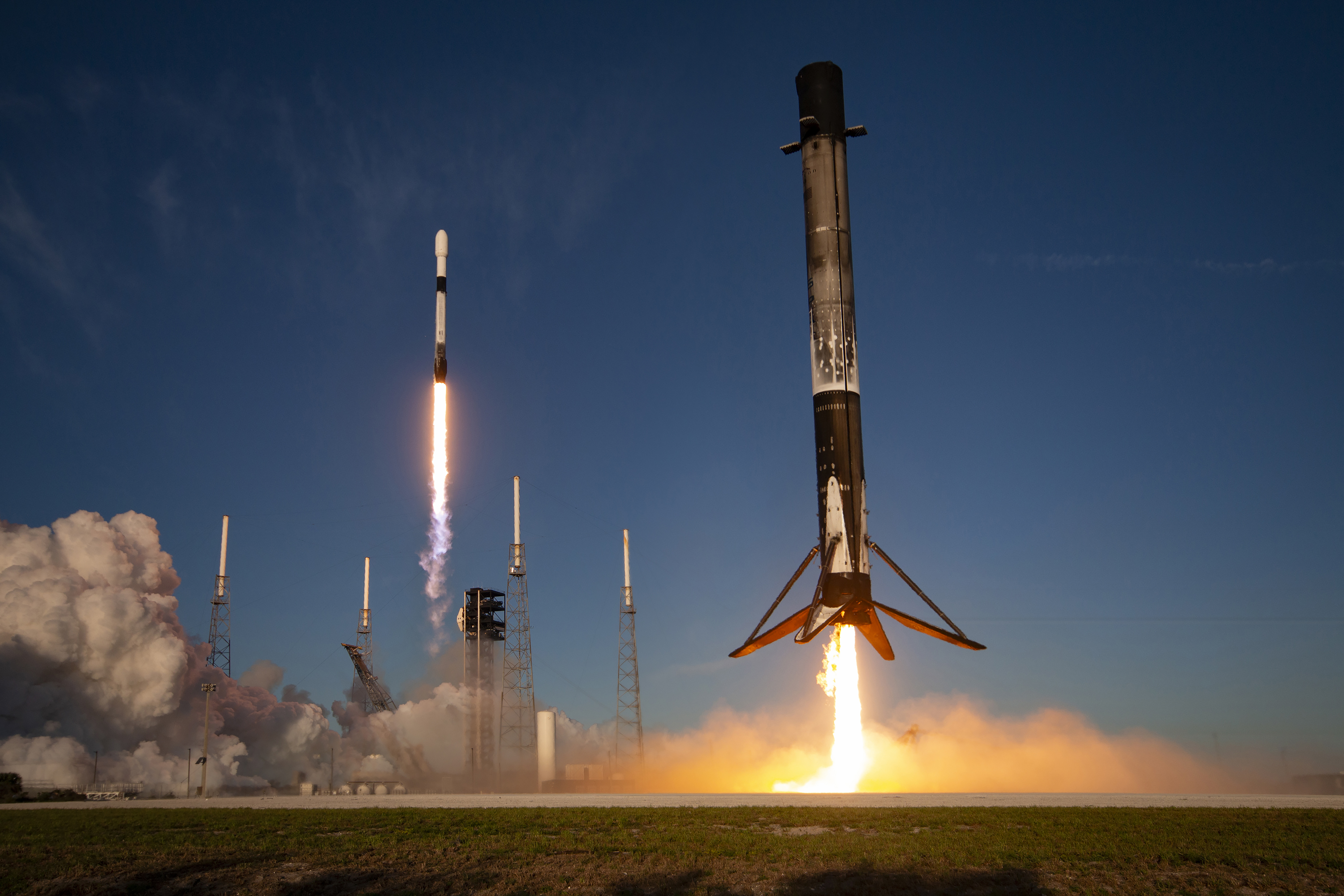

SpaceX achieved a critical development milestone tonight at Starbase, Texas, with the Starship Super Heavy booster successfully igniting all 33 of its Raptor 3 engines. This static fire test, conducted on the newly constructed orbital launch mount, marks the first time a Super Heavy booster has fired its full complement of upgraded Raptor 3 engines simultaneously. While the test was not full duration, it provided invaluable data on the integrated performance of the engines and the new ground infrastructure.
Upgraded Raptor 3 Engines Debut
The Raptor 3 engine represents the latest evolution in SpaceX's full-flow staged combustion engine design, boasting increased thrust and improved reliability compared to previous versions. Each engine is designed to produce over 280 tons of thrust at sea level, making the Super Heavy booster the most powerful rocket stage ever built. The successful ignition of all 33 engines is a testament to the advancements in engine manufacturing and integration at SpaceX.
The Raptor 3 engine offers higher performance and simplified design, crucial for the rapid reusability and operational efficiency envisioned for Starship.
New Launch Pad Enhancements
Tonight's test took place on the second orbital launch mount at Starbase, which features several significant upgrades over the original pad. These improvements are designed to enhance operational efficiency, safety, and resilience against the immense forces generated by a Super Heavy launch. Key upgrades include a more robust foundation, improved propellant loading systems, and an advanced water deluge system.
- Enhanced water deluge system to mitigate acoustic energy and heat
- Improved propellant transfer lines for faster and more efficient fueling
- Strengthened concrete foundation and structural elements
- Upgraded ground support equipment for rapid turnaround
Super Heavy Booster Improvements
Beyond the engines, the Super Heavy booster itself has undergone several design refinements aimed at improving performance and reusability. Notable upgrades include redesigned grid fins, which are now larger and more robust to aid in atmospheric control and landing. The integrated hot stage ring, visible between the booster and the Starship upper stage, is another critical enhancement, allowing the Starship’s engines to ignite while still attached to the booster during separation, a maneuver vital for maximizing payload to orbit.
First 33-engine static fire for Super Heavy V3 pic.twitter.com/m3swZHF7iQ
— SpaceX (@SpaceX) April 16, 2026
This successful static fire brings Starship closer to its next integrated flight test, an event eagerly anticipated by the spaceflight community. The data gathered from tonight’s test will be crucial for validating the booster’s readiness and ensuring the safety and success of future missions, as SpaceX continues its ambitious journey towards making humanity multi-planetary.