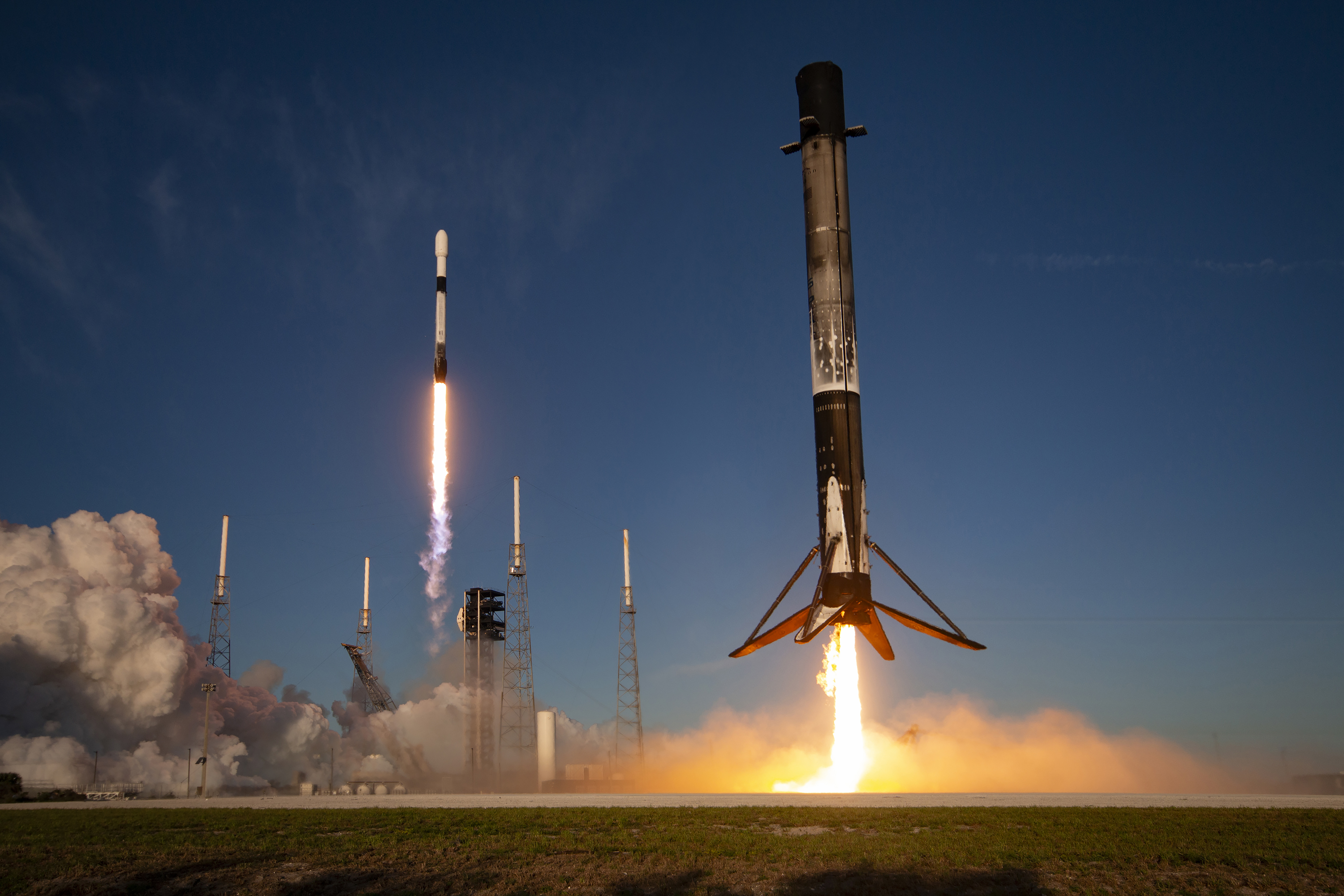
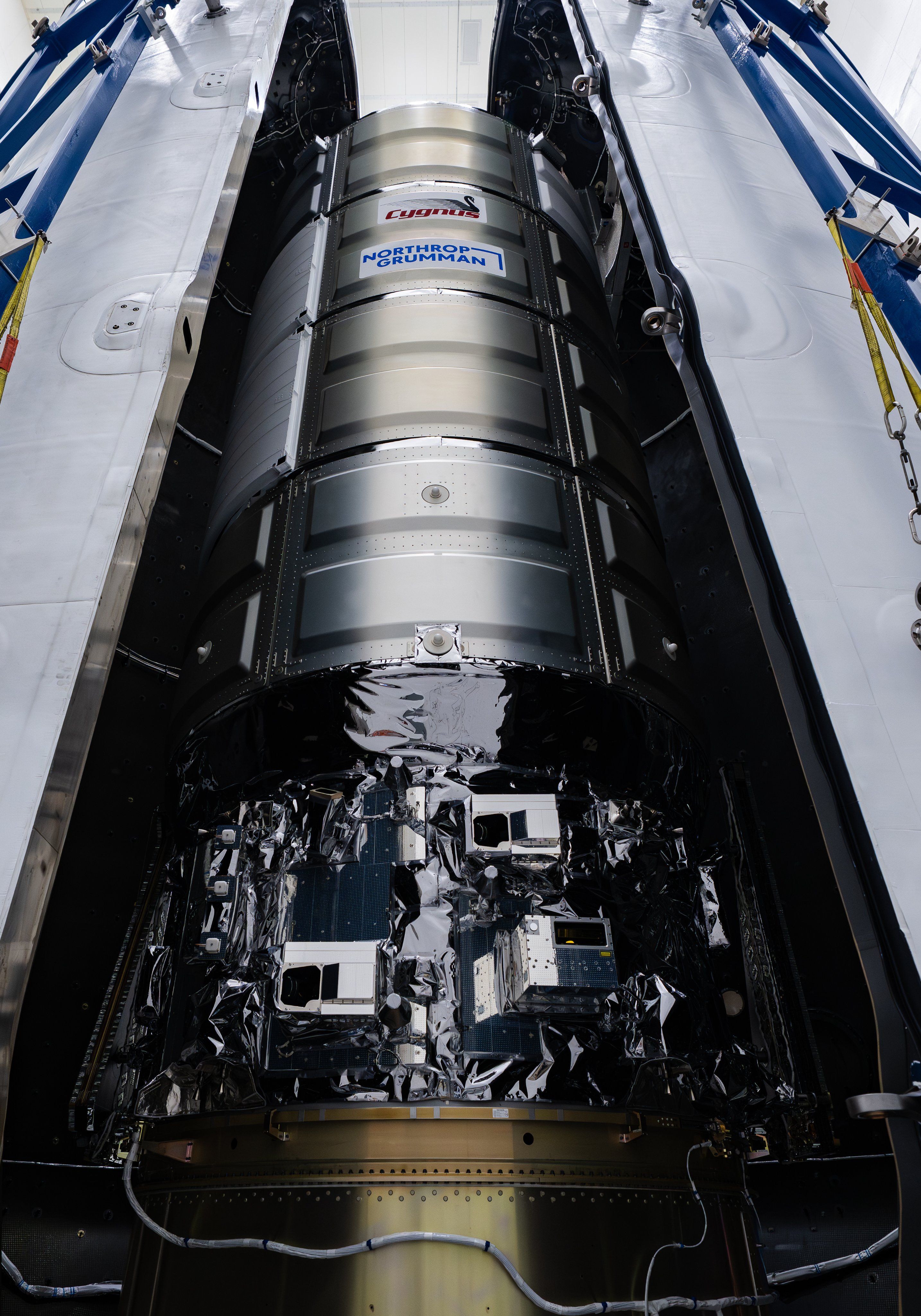
A SpaceX Falcon 9 rocket carrying the Northrop Grumman Cygnus XL resupply spacecraft lifted off from Space Launch Complex 40 at Cape Canaveral Space Force Station, Florida, this morning at 7:41 AM EDT (11:41 UTC). The mission, designated CRS-2 NG-24, is the 24th flight of a Cygnus cargo craft to the International Space Station and continues Northrop Grumman's second Commercial Resupply Services contract with NASA.
The spacecraft is named S.S. Steven R. Nagel, honoring the late NASA astronaut and veteran of four Space Shuttle missions who passed away in 2014. Cygnus is expected to be captured by the station's Canadarm2 robotic arm on Monday, April 13, at 12:50 PM EDT, then berthed to the Earth-facing port of the Unity module, where it will remain for approximately six months before departing for a destructive reentry over the Pacific Ocean.
The Falcon 9 and Booster Recovery
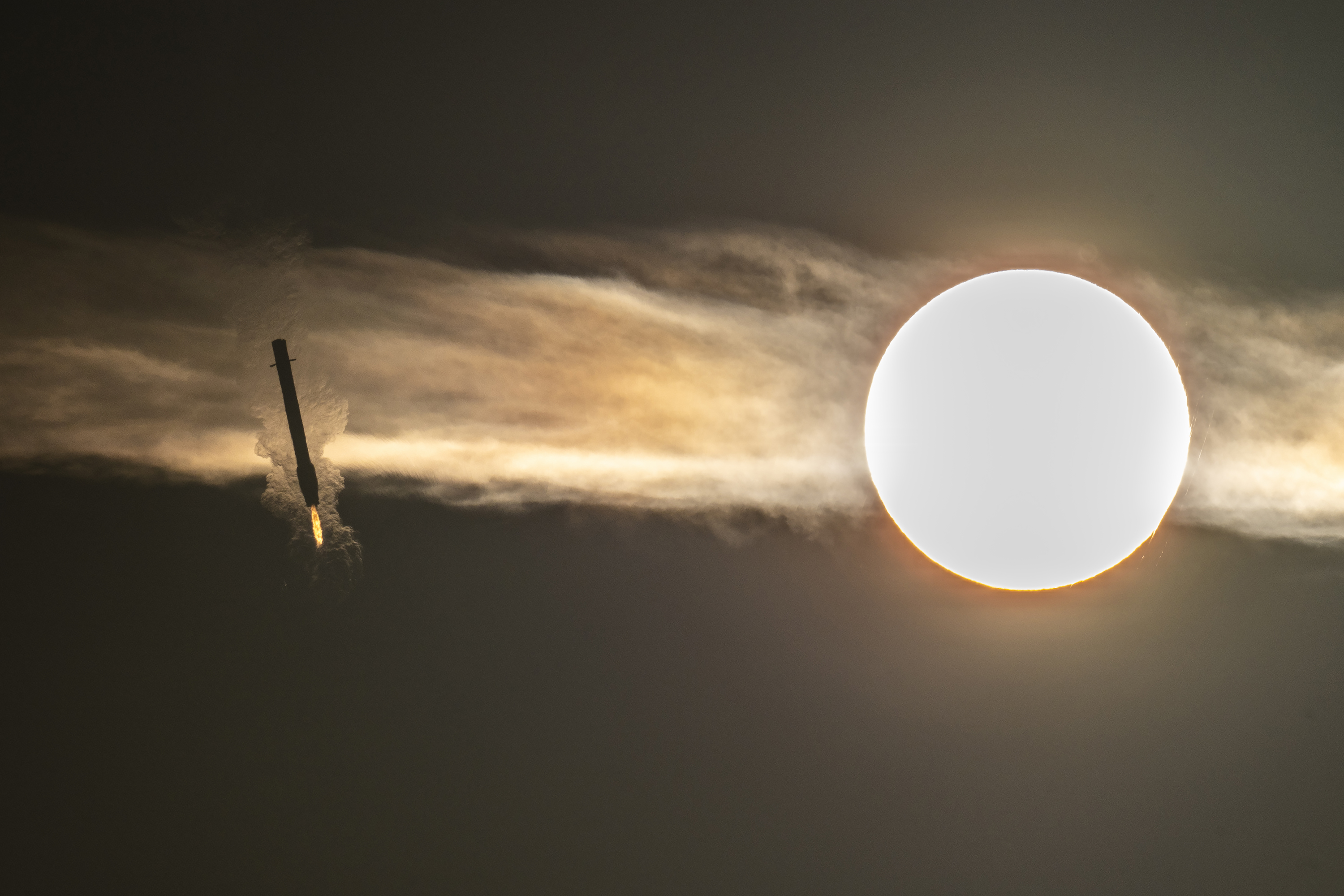
Saturday's launch used a Falcon 9 Block 5 booster that executed a Return to Launch Site recovery at Landing Zone 40 (LZ-40) at Cape Canaveral shortly after stage separation. LZ-40 is SpaceX's newest landing pad, situated close to SLC-40, and the RTLS profile returned the first stage to the ground in under ten minutes from liftoff.
Following stage separation, the second stage continued to orbit with Cygnus. After engine cutoff, the spacecraft deployed its two UltraFlex solar arrays, the large cymbal-shaped panels that give Cygnus its distinctive appearance. The two arrays together provide 3.5 kilowatts of power to the spacecraft during its free-flight phase and while berthed at the station.
What Cygnus Is Carrying
The S.S. Steven R. Nagel is carrying approximately 11,000 pounds (5,000 kilograms) of pressurized cargo to the ISS. The Cygnus XL provides 36 cubic meters of pressurized volume, the largest of any Cygnus variant flown. The manifest includes crew provisions, vehicle hardware, spacewalk equipment, and a range of scientific investigations.
| Payload | Type | Description |
|---|---|---|
| CAL Upgrade Module | Science Hardware | Next-generation quantum hardware for NASA's Cold Atom Laboratory; enables dual-species ultracold gas experiments at temperatures near absolute zero |
| ClimCam | External Payload | Climate camera jointly developed by Kenya, Egypt, and Uganda; mounts on the Columbus Bartolomeo platform for East Africa environmental monitoring |
| LEOPARDSat-1 | 1U CubeSat | Tests thin carbon sheeting as radiation shielding material for future deep space missions |
| Crew Provisions and Hardware | Station Support | Food, clothing, replacement parts, and EVA equipment to sustain ISS operations and research through late 2026 |
The Cold Atom Laboratory Upgrade
Among the science payloads aboard this Cygnus is an upgrade module for NASA's Cold Atom Laboratory (CAL), a facility aboard the ISS that produces some of the coldest matter ever created. Microgravity allows ultracold atom clouds to be studied for far longer than is possible on Earth, where gravity quickly pulls them apart.
The new hardware enables CAL to work with two atomic species simultaneously for the first time: rubidium and potassium. Dual-species experiments advance work in quantum sensing, fundamental physics tests, and inertial navigation technology that does not depend on GPS signals.
ClimCam: Africa's Eye in Orbit
ClimCam is the first climate-monitoring instrument jointly developed by three African nations: Kenya, Egypt, and Uganda. Once installed on the Bartolomeo external platform on the Columbus module, it will provide near-real-time imagery of East Africa to support disaster response, crop monitoring, and climate research across the region.
The instrument is designed to operate for six months, aligned with the Cygnus berthing duration. Data will be downlinked to ground stations operated by the Kenya Space Agency and partner agencies.
S.S. Steven R. Nagel: The Namesake
Each Cygnus spacecraft is named for a person who contributed to human spaceflight. The 24th cargo ship honors Steven Ray Nagel, born October 27, 1946, in Canton, Illinois. Nagel was selected as a NASA astronaut in 1979 as part of the eighth astronaut class and flew four Space Shuttle missions over a span of eight years.
| Mission | Year | Vehicle | Role |
|---|---|---|---|
| STS-51G | 1985 | Discovery | Mission Specialist |
| STS-61A | 1985 | Challenger | Mission Specialist |
| STS-37 | 1991 | Atlantis | Pilot |
| STS-55 | 1993 | Columbia | Commander |
Over four missions, Nagel logged more than 723 hours in space. A decorated Air Force test pilot with more than 12,000 flight hours, he retired from NASA in May 2011 and spent his remaining years as an instructor at the University of Missouri's College of Engineering. He passed away on August 21, 2014, from melanoma, at age 67.
Rendezvous and Station Operations
Following Saturday's launch, Cygnus entered its phasing orbit and began a two-day rendezvous sequence with the ISS. The spacecraft is scheduled to arrive at the station on Monday, April 13, with Canadarm2 capture set for 12:50 PM EDT. After capture, ground controllers will berth the spacecraft to the Earth-facing port of the Unity module.
Cargo unloading will take several weeks, with crew members transferring pressurized cargo from Cygnus to the station in sessions fitted around research and maintenance schedules. Unlike SpaceX's Dragon capsule, Cygnus cannot return cargo to Earth. When it departs in approximately six months, the station crew will load it with waste and unneeded hardware before Cygnus performs a deorbit burn and burns up during reentry over the Pacific Ocean.
The mission is the latest in a continuous series of Cygnus resupply flights stretching back to 2013, each one restocking the hardware and provisions that keep the station running and its research program moving forward.