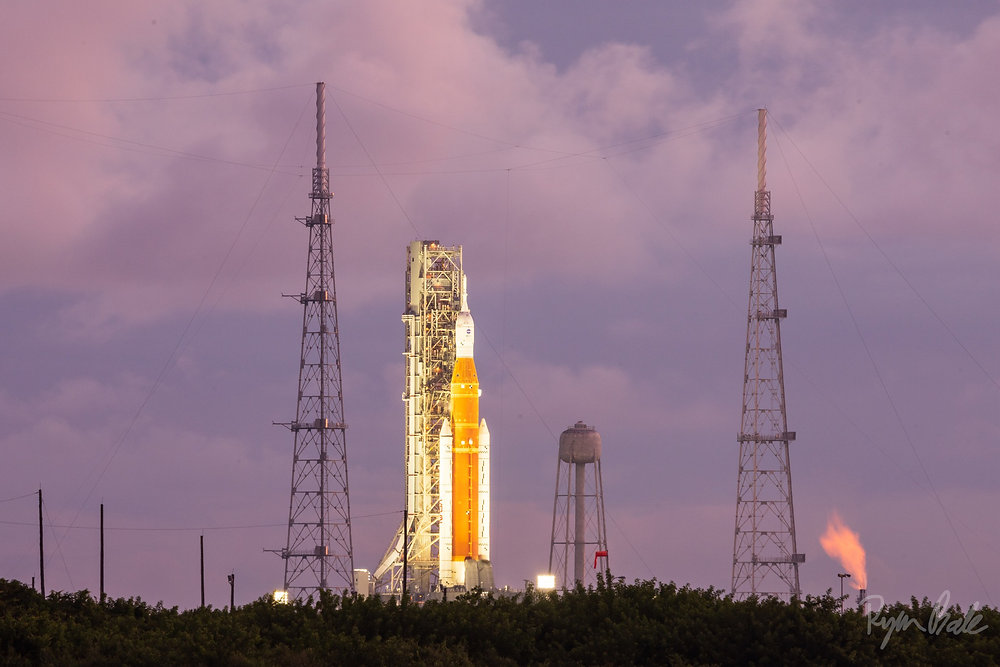
Artemis II launched from Kennedy Space Center on April 1, 2026, and splashed down on April 10, completing a 10-day free-return trajectory around the Moon. It was the first time humans had traveled beyond low Earth orbit since Apollo 17 in December 1972, and the first crewed lunar flyby in more than 50 years. The mission's primary objective was to validate the Space Launch System and Orion spacecraft with a crew aboard in the deep-space environment, ahead of future lunar landing missions.
What follows is a complete account of the mission — from the vehicle and crew through to recovery.
The Space Launch System
Artemis II flew on the SLS Block 1 configuration, the same vehicle type that flew the uncrewed Artemis I mission in November 2022. Standing approximately 322 feet tall, the rocket produces around 8.8 million pounds of thrust at liftoff through four RS-25 main engines and two five-segment solid rocket boosters. The RS-25 engines are Space Shuttle heritage hardware, refurbished for SLS use.
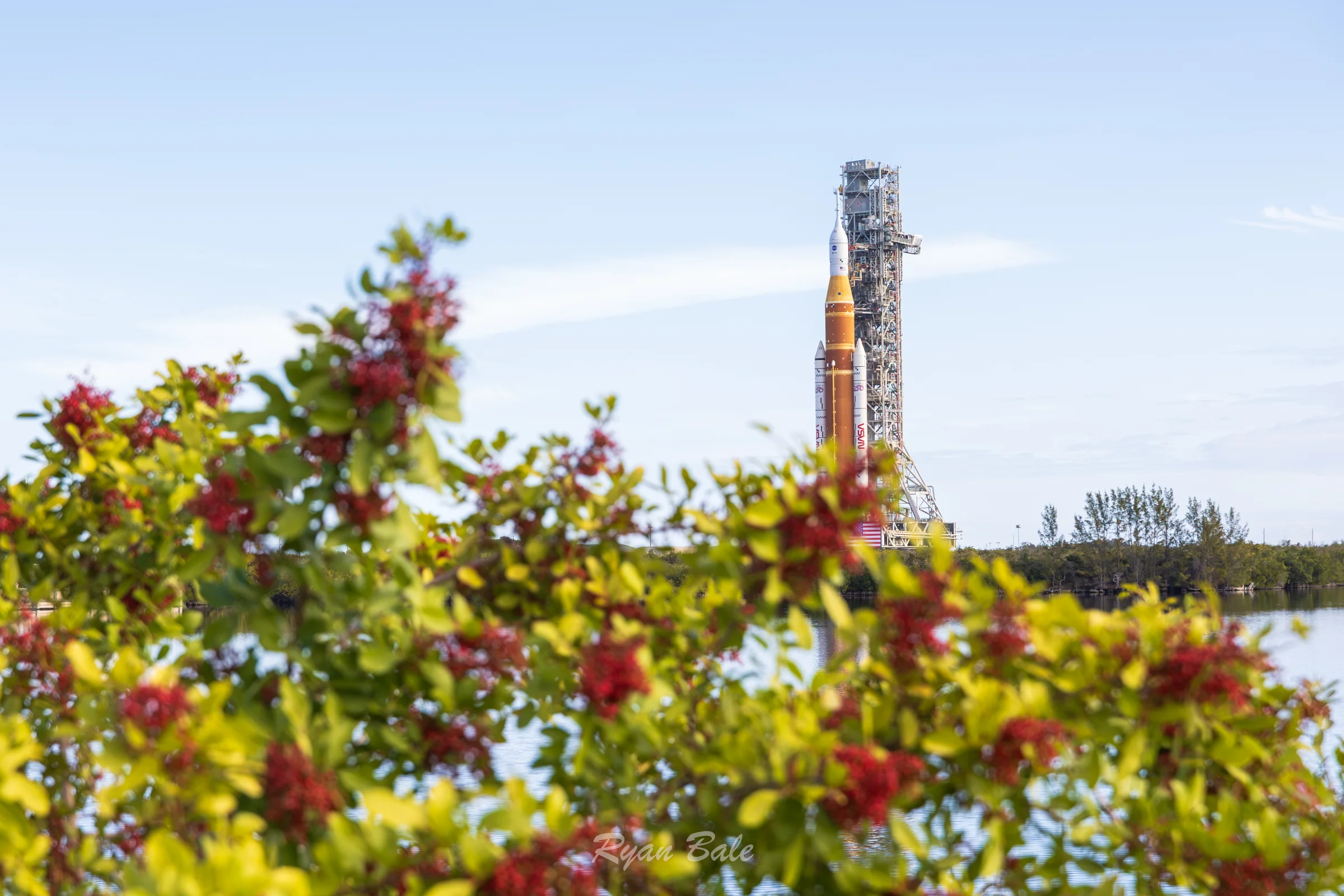
Above the core stage sits the Interim Cryogenic Propulsion Stage (ICPS), a single RL-10-powered upper stage responsible for the translunar injection burn. After TLI, the ICPS separates and is no longer used. The Orion spacecraft and its Launch Abort System sit at the top of the stack. The LAS is jettisoned prior to orbital insertion after the crew is safely past the most critical phase of ascent.
Stacking operations began on November 20, 2024. The fully integrated Orion was placed atop SLS on October 20, 2025. The vehicle went through two rollouts to Launch Complex 39B, with a rollback to the Vehicle Assembly Building in February 2026 following a helium leak in the ICPS. The final rollout took place on March 20, 2026.
The Orion Spacecraft
The crew named their Orion capsule Integrity. It was the second flight of an Orion crew module, following Artemis I. The capsule flew with a fully operational Environmental Control and Life Support System for the first time, designed to support four crew members on missions beyond Earth orbit. Attached to the crew module is the European Service Module, built by Airbus for ESA, which provides propulsion, power, thermal control, and water storage. NASA confirmed after splashdown that the mission consumed less than half of the fuel carried aboard the ESM.
The heat shield was a significant pre-flight concern. Post-flight analysis of Artemis I found unexpected erosion in the AVCOAT ablative material beyond what models had predicted. NASA convened an independent review team and, in January 2026, Administrator Jared Isaacman confirmed the agency would proceed with the existing design after reviewing the engineering analysis. Design changes are planned for the Artemis III heat shield based on lessons from both missions.
The Crew
The Artemis II crew was announced by NASA Administrator Bill Nelson on April 3, 2023. The four astronauts set multiple firsts for human spaceflight to the lunar vicinity.
| Role | Name | Background |
|---|---|---|
| Commander | Reid Wiseman Oldest person to travel to lunar vicinity |
U.S. Navy aviator and test pilot. Second spaceflight, following a 165-day ISS mission in 2014. NASA class of 2009. |
| Pilot | Victor Glover First person of color to travel to lunar vicinity |
U.S. Navy test pilot. Previously piloted SpaceX Crew-1 and served as flight engineer aboard the ISS for Expedition 64. NASA class of 2013. |
| Mission Specialist | Christina Koch First woman to travel to lunar vicinity |
Engineer and scientist. Holds the record for longest single spaceflight by a woman, with 328 consecutive days aboard the ISS from March 2019 to February 2020. NASA class of 2013. |
| Mission Specialist | Jeremy Hansen First Canadian and first non-American to travel to lunar vicinity |
Royal Canadian Air Force fighter pilot and former NASA capcom. First spaceflight. Canadian Space Agency class of 2009. |
Artemis II also set a record for the most people in deep space at the same time, surpassing the previous mark of three set by Apollo 8 in December 1968. Hansen's seat was secured through a 2020 agreement between the United States and Canada under which Canada's contribution of Canadarm3 to the Gateway program included a Canadian position on an Artemis mission.

Launch: April 1, 6:35 p.m. EDT
The crew completed their walkout from the Neil A. Armstrong Operations and Checkout Building at 1:49 p.m. EDT. Suit checks and spacecraft ingress followed through the afternoon. The countdown experienced a brief issue with the Flight Termination System that was resolved before the launch window opened, along with a separate battery instrumentation concern that was determined not to affect flight safety.
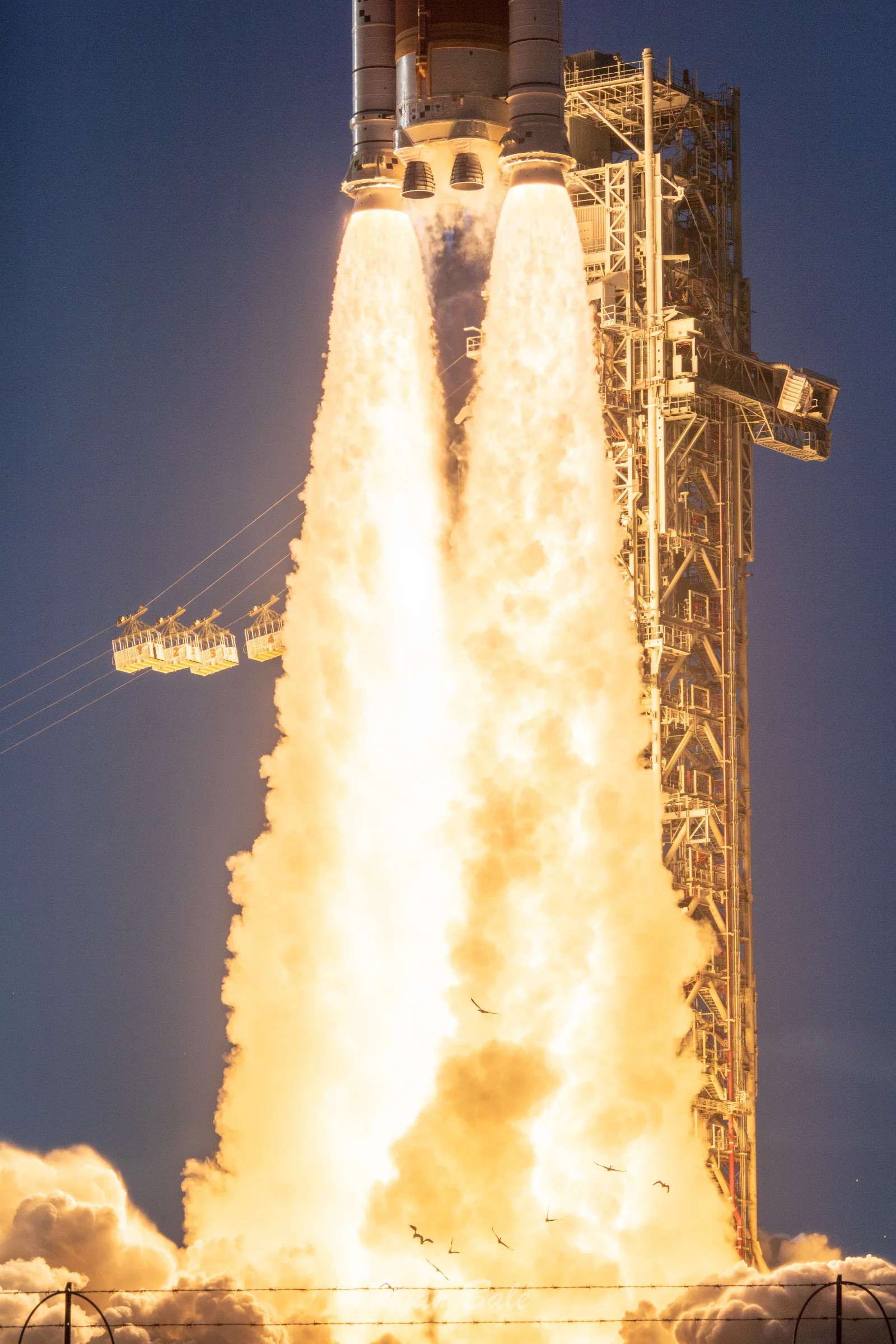
At T-0, the four RS-25 engines and two solid rocket boosters ignited. The SLS lifted off from Launch Complex 39B at 6:35 p.m. EDT. The flight was automated, with Commander Wiseman monitoring from the left seat at Orion's primary controls and retaining the ability to issue an abort command if required.
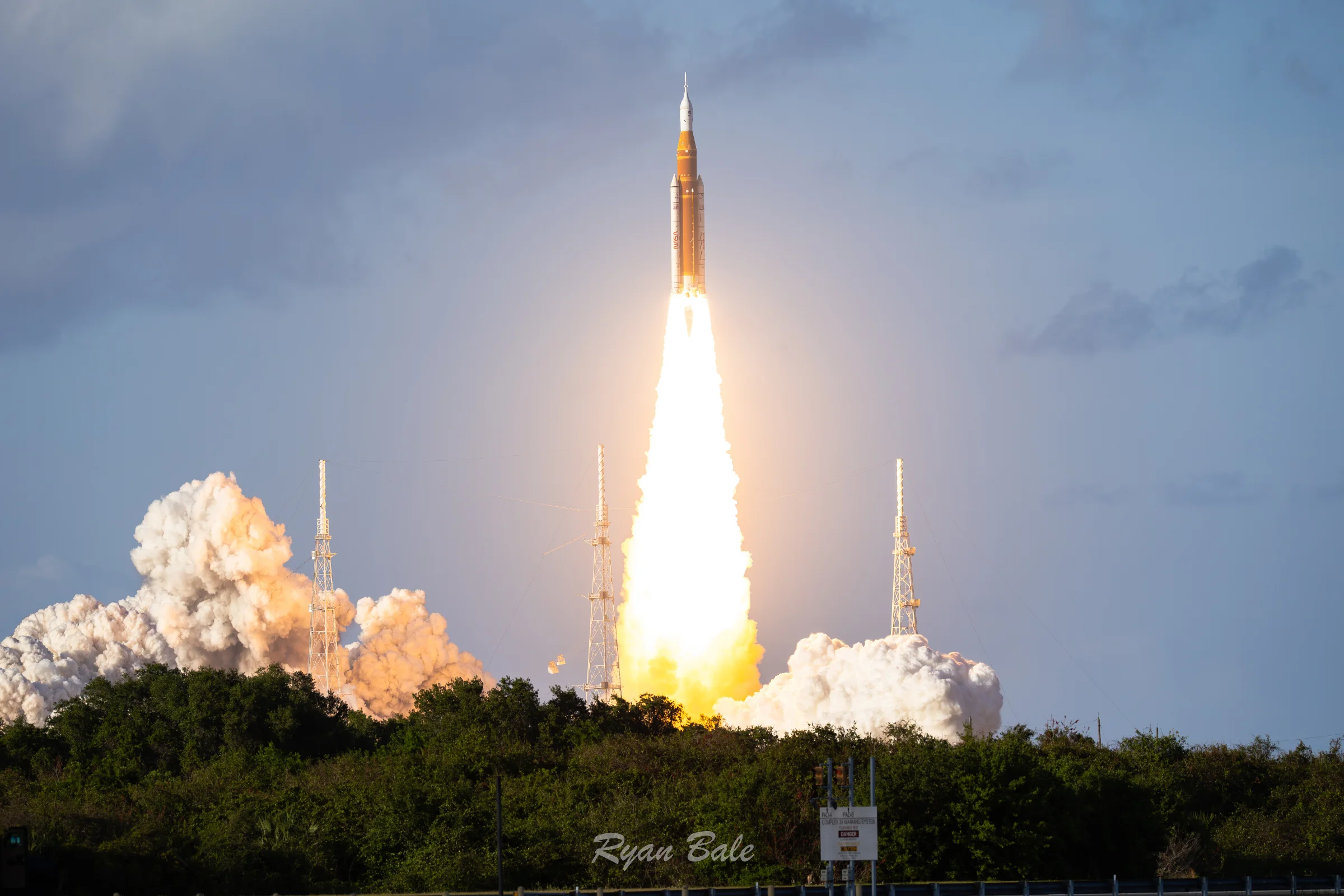
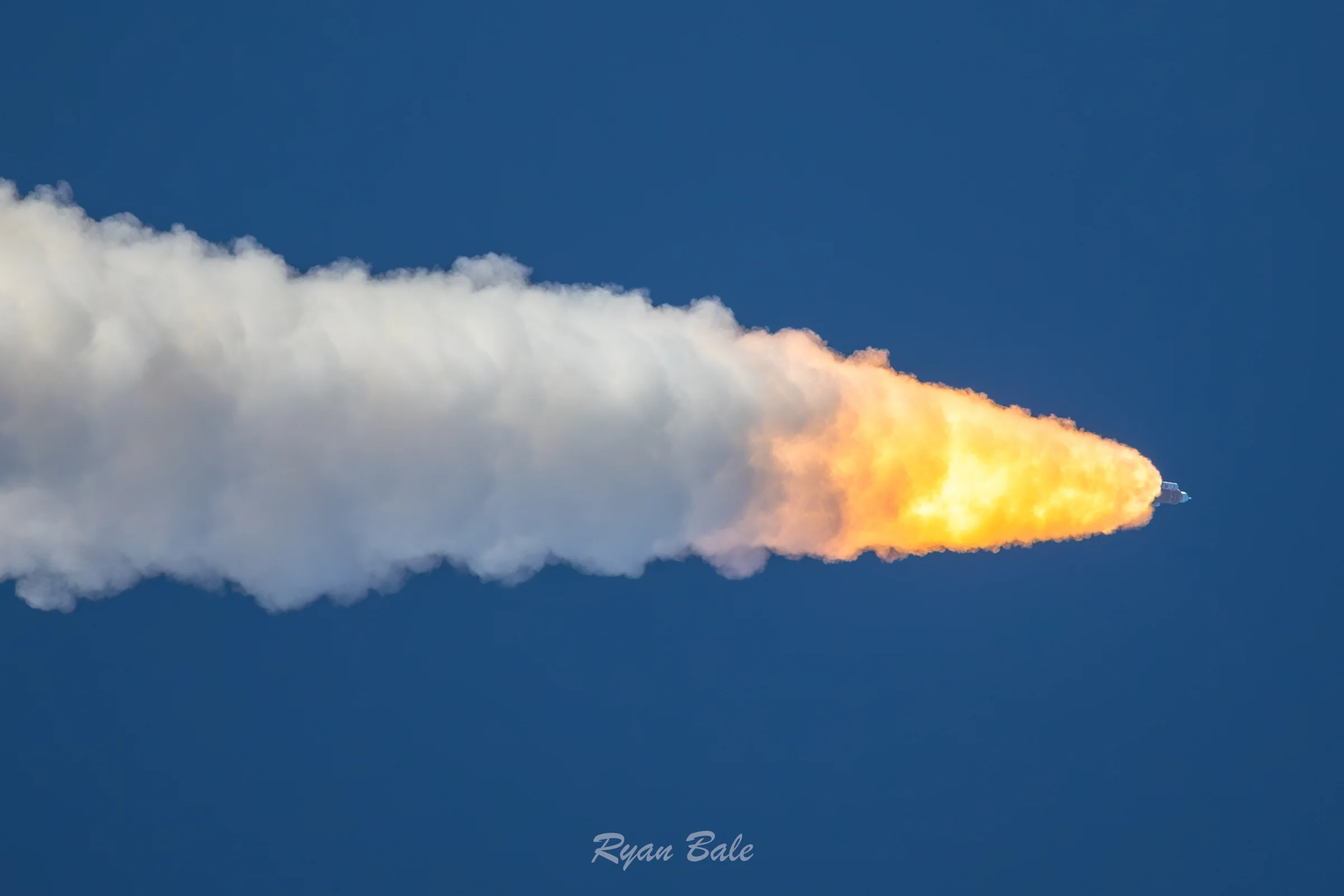
Solid rocket booster separation occurred at approximately T+2 minutes. Core stage main engine cutoff and separation followed at around T+8 minutes. The core stage made a destructive reentry over the Pacific Ocean roughly two hours after launch. Orion entered a highly elliptical orbit with an apogee of approximately 1,400 miles, nearly five times the altitude of the International Space Station.
Shortly after MECO, Koch and Hansen unstrapped from their seats and set up essential life-support systems including the water dispenser, firefighting masks, and the toilet. A minor toilet issue was resolved by Koch before the crew proceeded with system checkouts.
After completing two orbits and receiving mission management approval, the ICPS performed the translunar injection burn at approximately 7:49 p.m. EDT, firing for five minutes and 49 seconds and sending Orion on a free-return trajectory toward the Moon. The ICPS then separated.
Translunar Coast: Days 1 Through 5
Day 1 was spent in high Earth orbit conducting system checkouts before TLI. Once on the translunar trajectory, the crew evaluated Orion's life-support, propulsion, power, thermal, and navigation systems continuously. Manual piloting tests and proximity operations assessments were also conducted during this period.
On the boundary of flight days 5 and 6, at 12:37 a.m. EDT on April 6, Orion entered the Moon's sphere of gravitational influence at approximately 41,000 miles from the lunar surface. From this point, the Moon's gravity was stronger than Earth's. Koch noted: "We are now falling to the Moon rather than rising away from Earth."
Lunar Flyby: April 6
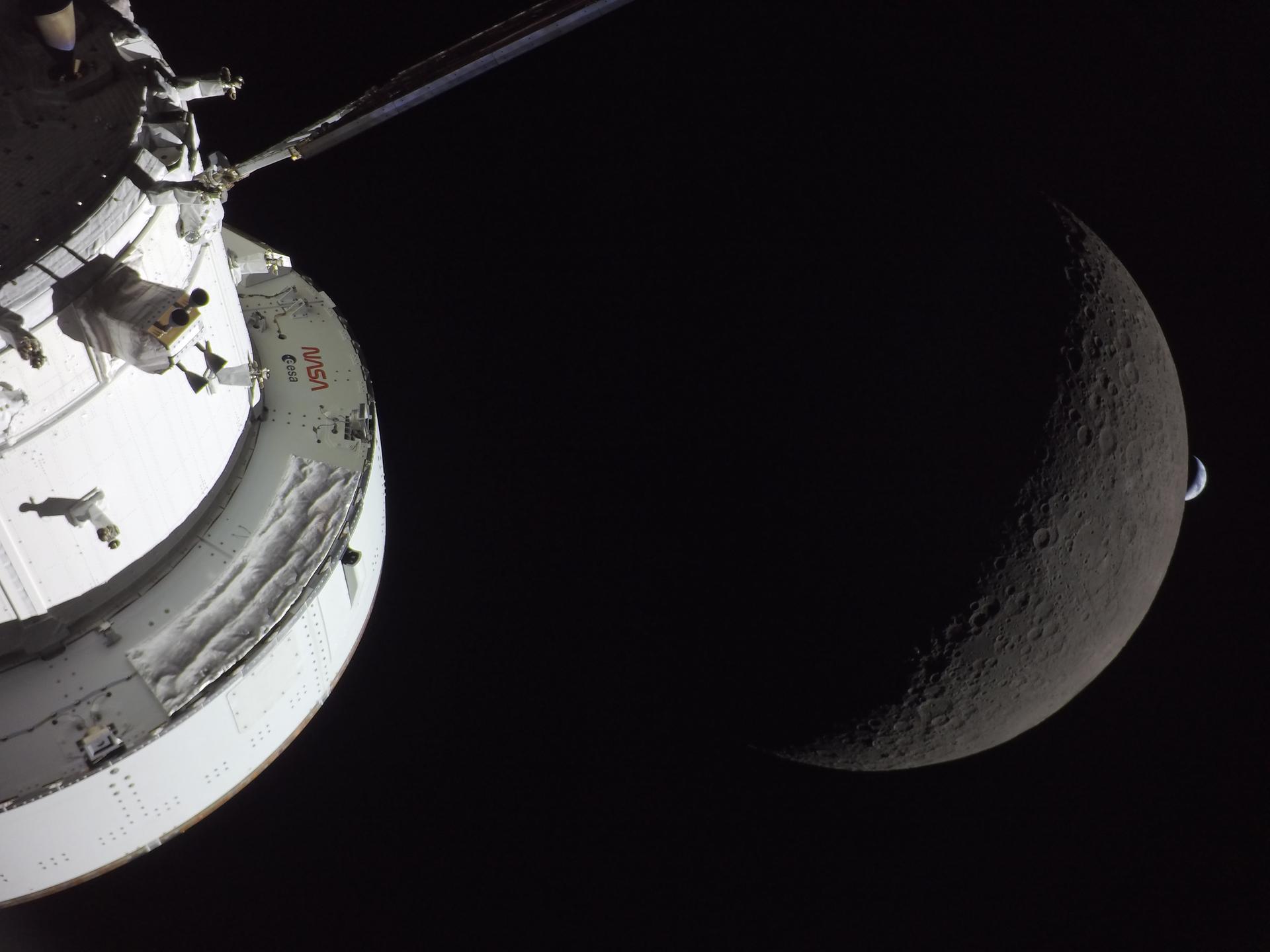
The lunar observation period began at approximately 2:45 p.m. EDT on April 6, covering roughly seven hours during which Orion was close enough to the Moon for the crew to make meaningful science observations.
At 1:56 p.m. EDT, Orion surpassed the previous human spaceflight distance record of 248,655 miles from Earth, set by Apollo 13 in 1970. The record was broken before closest approach because the Moon is currently at a more distant point in its elliptical orbit than it was during the Apollo program.
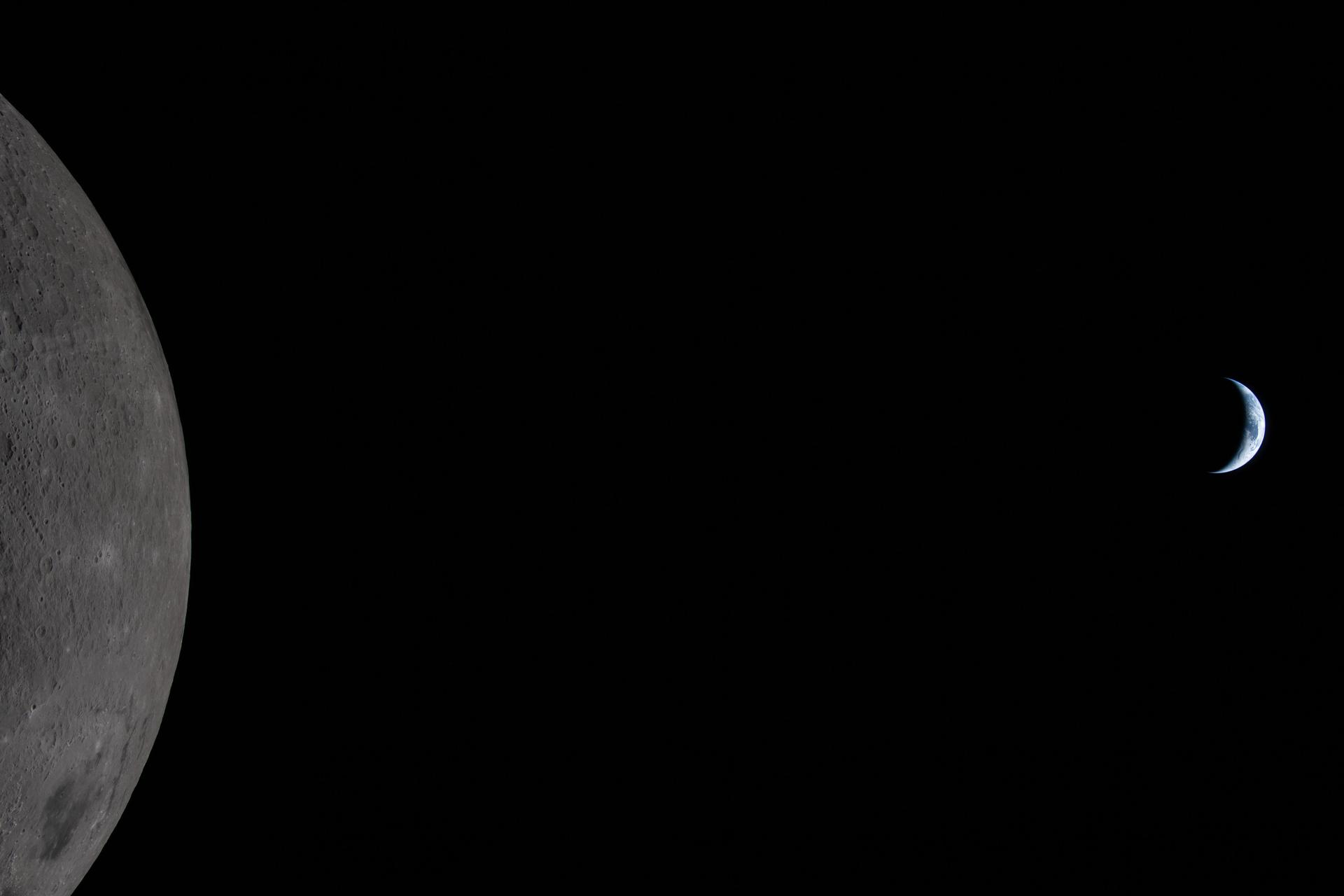
At approximately 6:44 p.m. EDT, Orion passed behind the Moon, entering a planned communications blackout of around 40 minutes as the lunar mass blocked all contact with the Deep Space Network. Closest approach occurred at approximately 7:00 p.m. EDT, at about 4,067 miles above the lunar surface. Two minutes later, Orion reached its maximum distance of 252,756 miles (406,771 km) from Earth, setting the new absolute record for human spaceflight distance.
When communications were restored, Koch radioed: "It is so great to hear from Earth again."
Science Observations
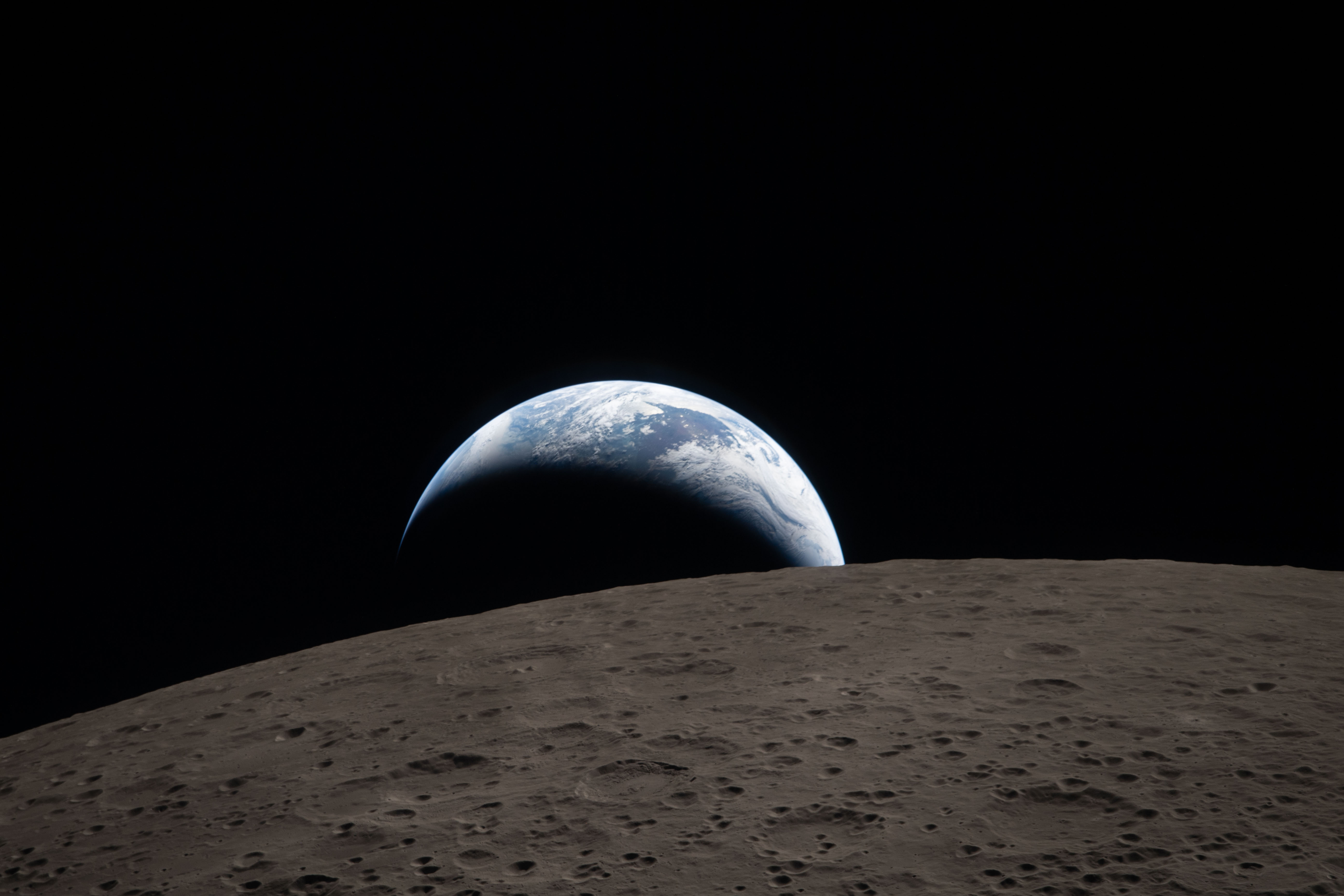
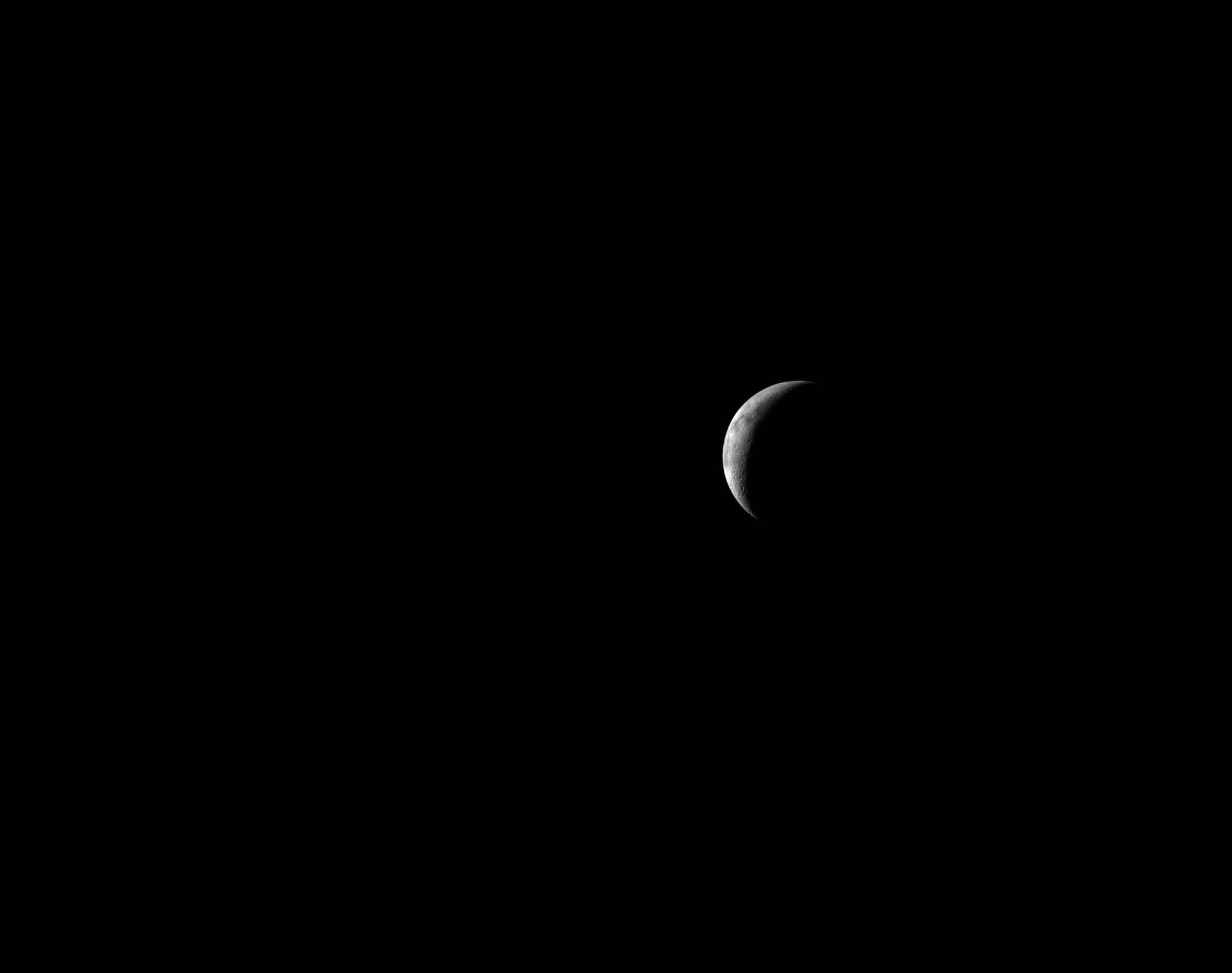
Throughout the flyby, the crew documented the lunar surface using multiple cameras and took thousands of photographs. On the near side, they observed Reiner Gamma, a bright surface swirl whose origin is still under investigation, and Glushko crater, a 27-mile-wide feature with prominent ray systems extending up to 500 miles. As Orion traveled around the far side, the crew documented terrain not previously seen by human eyes, including impact craters, ancient lava flows, and surface fractures.
Flyby Science Observations
- ·Impact craters and ancient lava flows on the lunar far side
- ·Surface fractures and ridge systems
- ·Color and brightness variations for mineral composition mapping
- ·Reiner Gamma swirl on the near side
- ·Earthset and Earthrise from behind the Moon
- ·South Pole-Aitken basin terrain and Vavilov Crater
- ·Hertzsprung basin rim for geologic age comparison
- ·Six meteoroid impact flashes on the darkened lunar surface
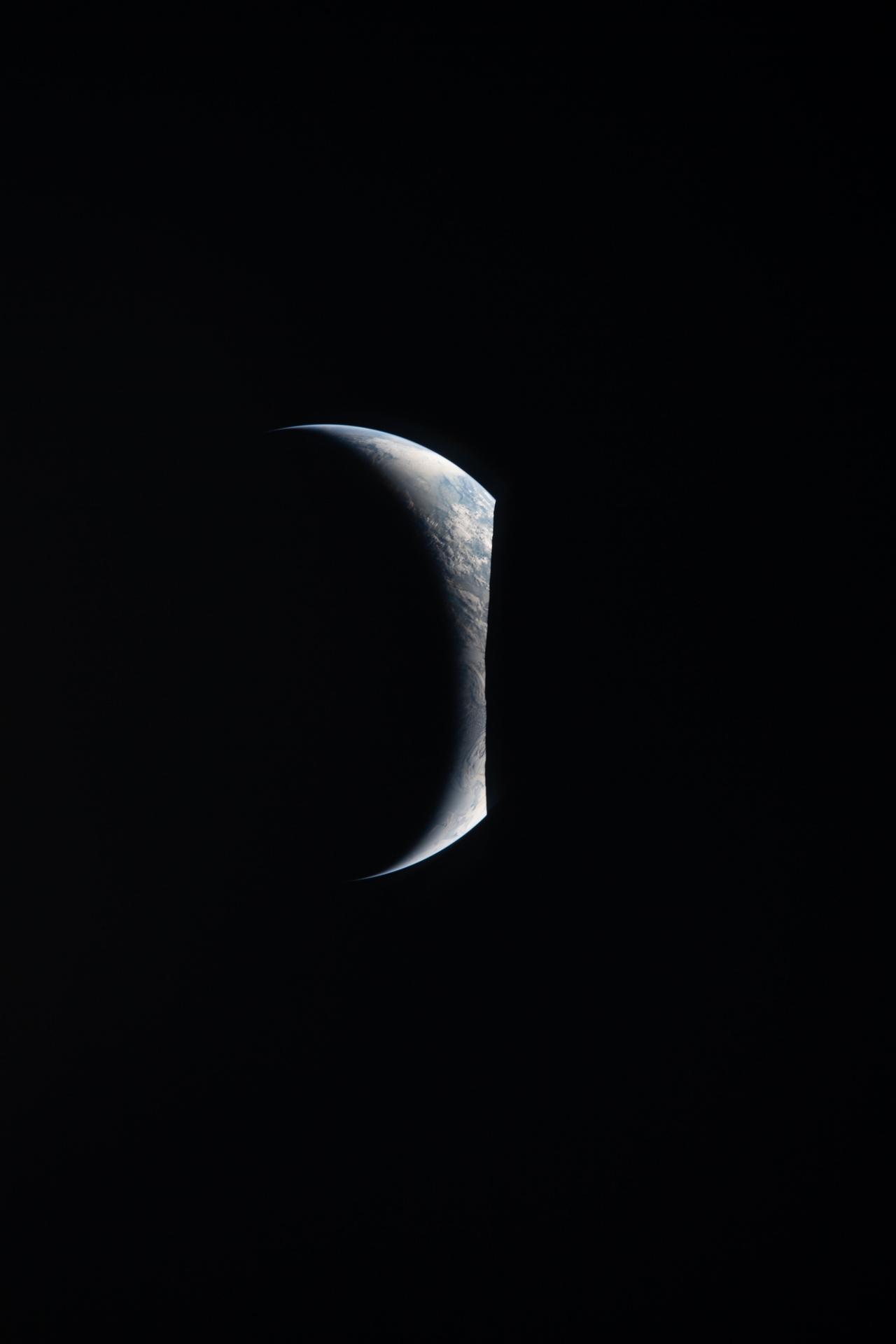
Solar Eclipse
Beginning at approximately 8:35 p.m. EDT, Orion entered a total solar eclipse as the spacecraft, Moon, and Sun aligned. From the crew's position, the Moon appeared large enough to completely block the Sun, producing nearly 54 minutes of totality. For comparison, total solar eclipses observable from Earth's surface typically last only a few minutes at a given location.
The crew wore eclipse glasses to protect their eyes, the first use of solar eclipse viewers at lunar distance. During the eclipse, the crew studied the solar corona visible around the lunar edge and observed stars normally too faint to see when the Sun is unobscured. Venus, Mars, and Saturn were all visible along the ecliptic. Six meteoroid impact flashes were observed on the darkened lunar surface. NASA's science community is investigating whether the glow around the lunar disk was produced by the corona, zodiacal light, or a combination of both.
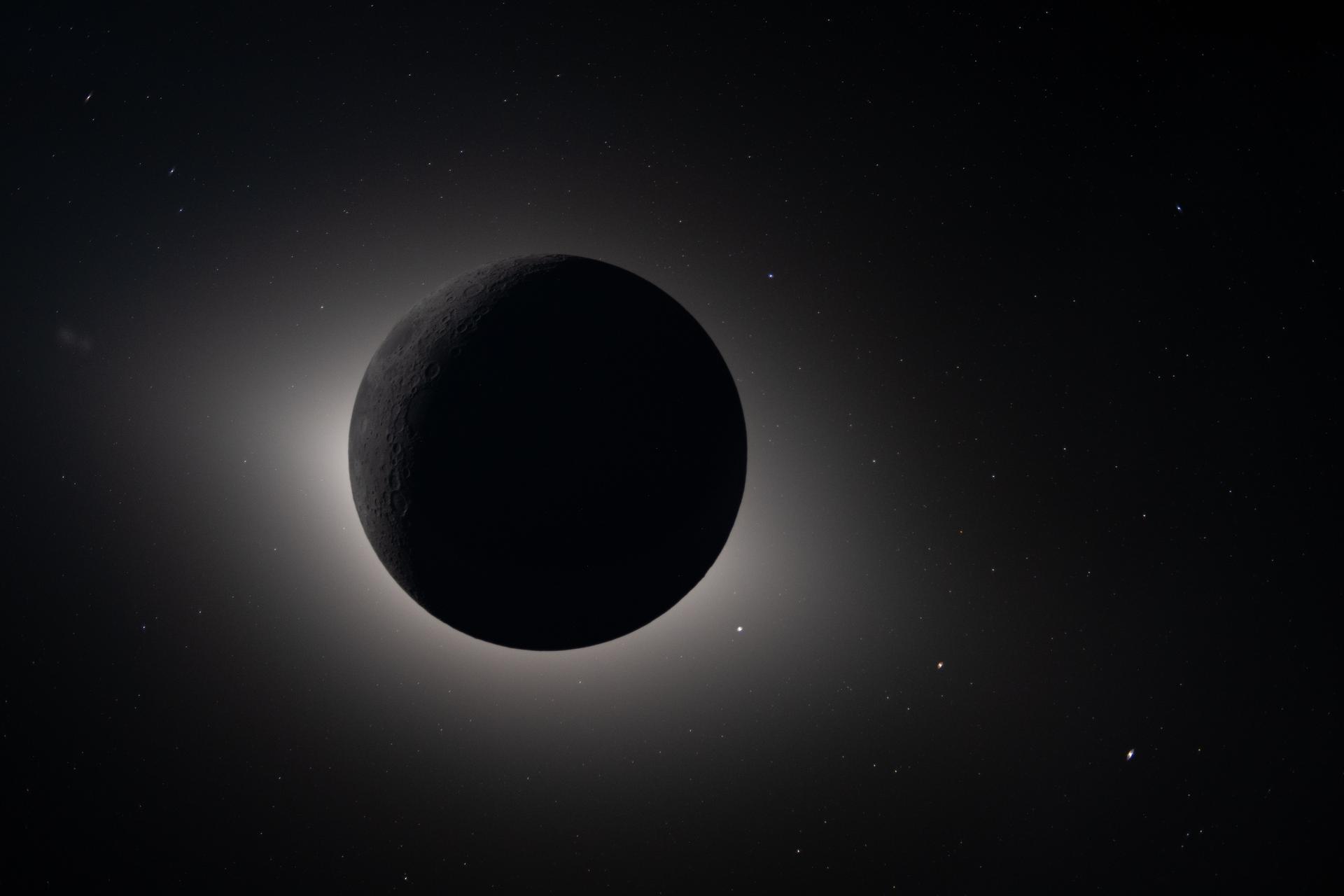
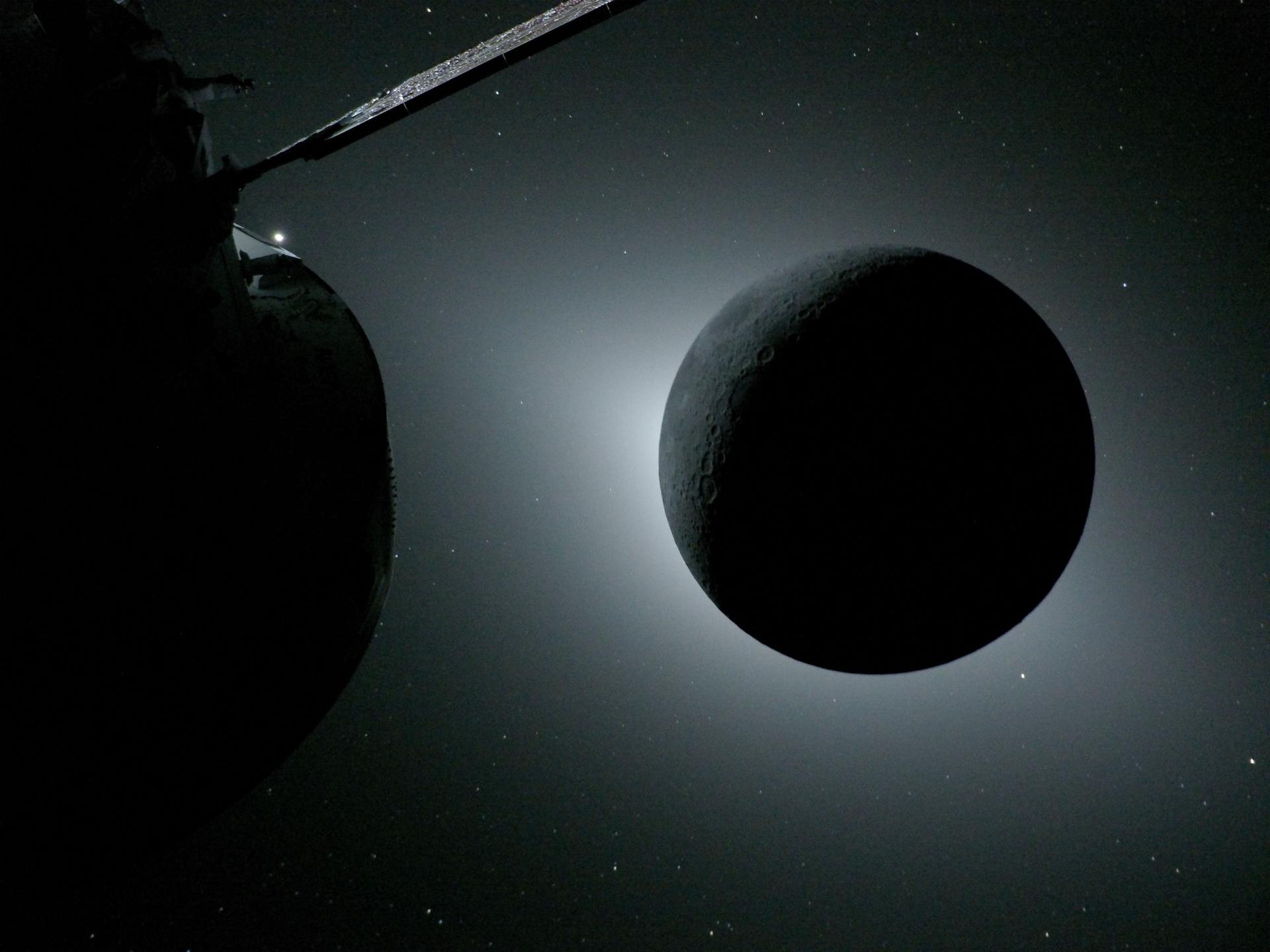
"After all of the amazing sites that we saw earlier, we just went sci-fi. You can actually see a majority of the moon."— Victor Glover, describing the view during the solar eclipse
The lunar observation period concluded at approximately 9:32 p.m. EDT when the Sun re-emerged from behind the Moon. Following the flyby, the crew spoke with President Trump and NASA Administrator Jared Isaacman in a live conversation broadcast as part of NASA's mission coverage.
Return to Earth: Days 7 Through 9
Orion left the Moon's sphere of gravitational influence on April 7 at approximately 1:25 p.m. EDT, at a distance of about 41,072 miles from the Moon. From this point, Earth's gravity was dominant and the spacecraft was on its homeward arc with no propulsion needed — a key feature of the free-return trajectory that ensures crew safety even in the event of a propulsion failure.
Flight Day 7 was a lighter day, focused on debriefing the Artemis II Lunar Science Team and downlinking imagery from the flyby. On Day 8, a planned manual control test by Wiseman and Glover was canceled so controllers could gather additional data on a small helium leak in the ESM's propulsion system. The leak posed no safety risk but the data will be used to inform modifications for future missions. A planned radiation shelter construction demonstration was also canceled on Day 8.
Day 9 included a 9-second trajectory correction burn to refine Orion's return path. The crew spent the remainder of the day stowing equipment, installing their seats, and reviewing reentry procedures.
Reentry: April 10
On Day 10, Orion performed an 8-second trajectory correction burn, the final firing of the European Service Module before jettison. At 7:33 p.m. EDT, the crew module separated from the service module. Following separation, Orion's crew module thrusters fired for 19 seconds to push it clear and set the correct reentry angle.
The crew donned pressure suits and compression garments in preparation for entry. Orion hit the upper atmosphere at approximately 400,000 feet altitude while traveling at about 34,965 feet per second (roughly 23,840 mph). Peak deceleration reached approximately 3.9 Gs. External heat shield temperatures reached approximately 5,000 degrees Fahrenheit. A planned six-minute communications blackout occurred as ionized plasma surrounded the capsule during peak heating.
After the blackout, Mission Control reacquired the signal and confirmed GPS lock. Two drogue parachutes slowed Orion to approximately 300 mph, followed by three pilot parachutes and then three main parachutes that brought the capsule to around 17 mph for water impact. NASA described reentry as "picture perfect."
Splashdown and Recovery
Orion splashed down at 8:07 p.m. EDT on April 10, 2026, in the Pacific Ocean off the coast of San Diego. Total mission elapsed time was 9 days, 1 hour, 31 minutes, and 48 seconds. Conditions at the splashdown zone were favorable, with 10 mph winds and 4-foot waves.
Recovery teams confirmed the capsule was safe to approach after splashdown. Divers entered the water and inspected the spacecraft. An inflatable collar was installed around Orion to stabilize it, and a second inflatable platform — the "front porch" — was attached outside the hatch for crew exit. One by one, all four crew members emerged and were hoisted by helicopter to the USS John P. Murtha. Post-mission medical evaluations were conducted aboard the ship before the crew traveled to shore and flew back to Johnson Space Center in Houston.
President Trump, watching from a dinner in Charlottesville, Virginia, congratulated the crew by social media post following splashdown. Canadian Prime Minister Mark Carney also welcomed home Jeremy Hansen, calling it "an historic feat."
What's Next
Post-flight analysis will cover Orion's systems performance, heat shield erosion data from reentry, crew radiation exposure measurements, and the science imagery and observations from the flyby. Heat shield data will directly inform the updated design planned for Artemis III.
Artemis III, targeted for mid-2027, will have the crew remain in Earth orbit to conduct a systems shakedown and docking tests with commercially developed human landing systems prior to any lunar surface attempt. Artemis IV, targeting early 2028, is planned as the first crewed lunar landing since Apollo 17.
The thousands of photographs taken during the flyby are still being processed. NASA's lunar science team will analyze the surface observations in detail, including the solar corona imagery from the eclipse and the geological documentation of the far side.