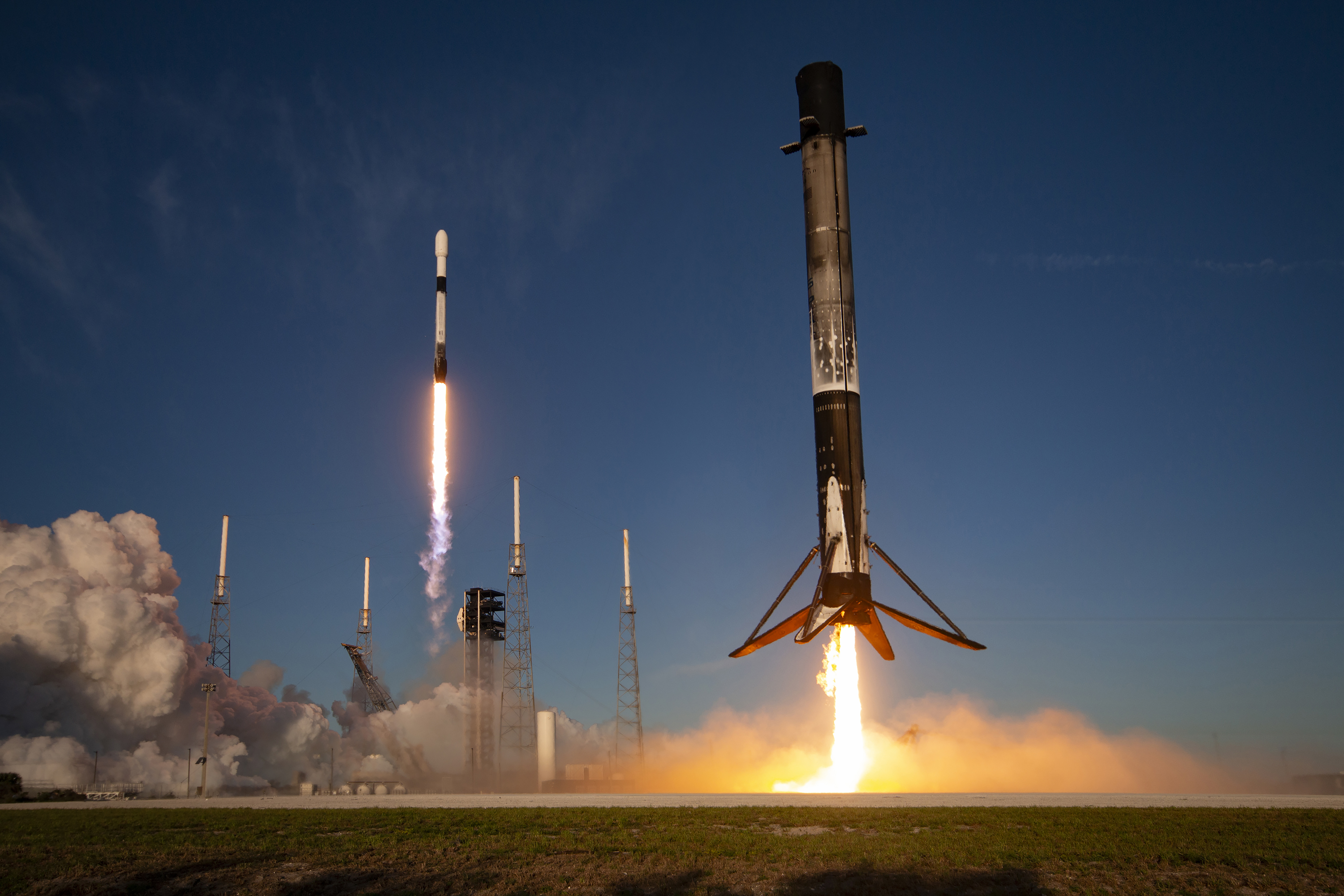
The European Space Agency's (ESA) Rosalind Franklin Mars rover mission has received a crucial boost with NASA's official approval to proceed with its Support and Augmentation (ROSA) project. This decision solidifies a renewed partnership between the two space agencies for the ambitious mission, which aims to launch in late 2028 aboard a SpaceX Falcon Heavy rocket.
The Rosalind Franklin mission, part of the broader ExoMars program, is designed to address one of humanity's most profound questions: has life ever existed on Mars? To achieve this, the rover will employ a sophisticated suite of instruments and a unique drilling capability to investigate the Martian subsurface.
Mission Objectives: Hunting for Life's Signatures
The primary objective of the Rosalind Franklin rover is to search for signs of past and present life on Mars and to characterize the water and geochemical environment as a function of depth in the shallow subsurface. This involves looking for biosignatures, which are physical and chemical evidence of life. The mission will focus on an ancient, clay-rich region called Oxia Planum, a site believed to have once harbored water.

The Rosalind Franklin rover will be the first Mars rover to drill into a depth of up to two metres below the planet's surface, seeking biomolecules or biosignatures from past life.
Unlike previous missions that primarily analyzed surface samples, the Rosalind Franklin rover's key distinguishing feature is its ability to drill up to two meters (approximately 6.6 feet) beneath the Martian surface. This will allow it to retrieve samples that have been protected from the harsh surface radiation and extreme temperatures, increasing the likelihood of finding preserved organic material.
Scientific Instruments and Teams
The rover is equipped with a comprehensive suite of instruments, collectively known as the Pasteur Payload, designed for exobiology, geochemistry, and research. These include the Panoramic Camera (PanCam) for high-resolution stereo imaging and geological investigation, and the Infrared Spectrometer for ExoMars (Enfys), which will identify minerals. UCL's Mullard Space Science Laboratory (MSSL) leads the PanCam team and contributes to Enfys.
Within its Analytical Laboratory Drawer (ALD), the rover houses three key instruments: MicrOmega, a hyperspectral microscope for mineral characterization; the Raman Laser Spectrometer (RLS) for detecting organic molecules; and the Mars Organic Molecule Analyzer (MOMA), which combines gas chromatography and a mass spectrometer to study and identify soil chemistry and search for organic compounds. NASA's Astrobiology Program has provided critical elements to the MOMA instrument. The rover also features a ground-penetrating radar (WISDOM) to help identify promising drilling targets and avoid hazards, and a neutron spectrometer to detect hydrogen as an indirect sign of water.
The Falcon Heavy Launch Vehicle

The Rosalind Franklin rover, along with its landing platform, will be launched by a SpaceX Falcon Heavy rocket from Launch Complex 39A at NASA's Kennedy Space Center. The Falcon Heavy is one of the world's most powerful operational rockets, capable of lifting significant payloads to various orbits, including trans-Mars injection.
Composed of three reusable Falcon 9 first-stage cores, the Falcon Heavy's 27 Merlin engines generate over 5 million pounds of thrust at liftoff, equivalent to approximately eighteen 747 aircraft. This immense power allows it to lift nearly 64 metric tons (141,000 lbs) to low Earth orbit, and approximately 16.8 metric tons (37,000 lbs) to Mars. Its robust capabilities make it an ideal choice for the Rosalind Franklin mission's demanding trajectory to the Red Planet.