
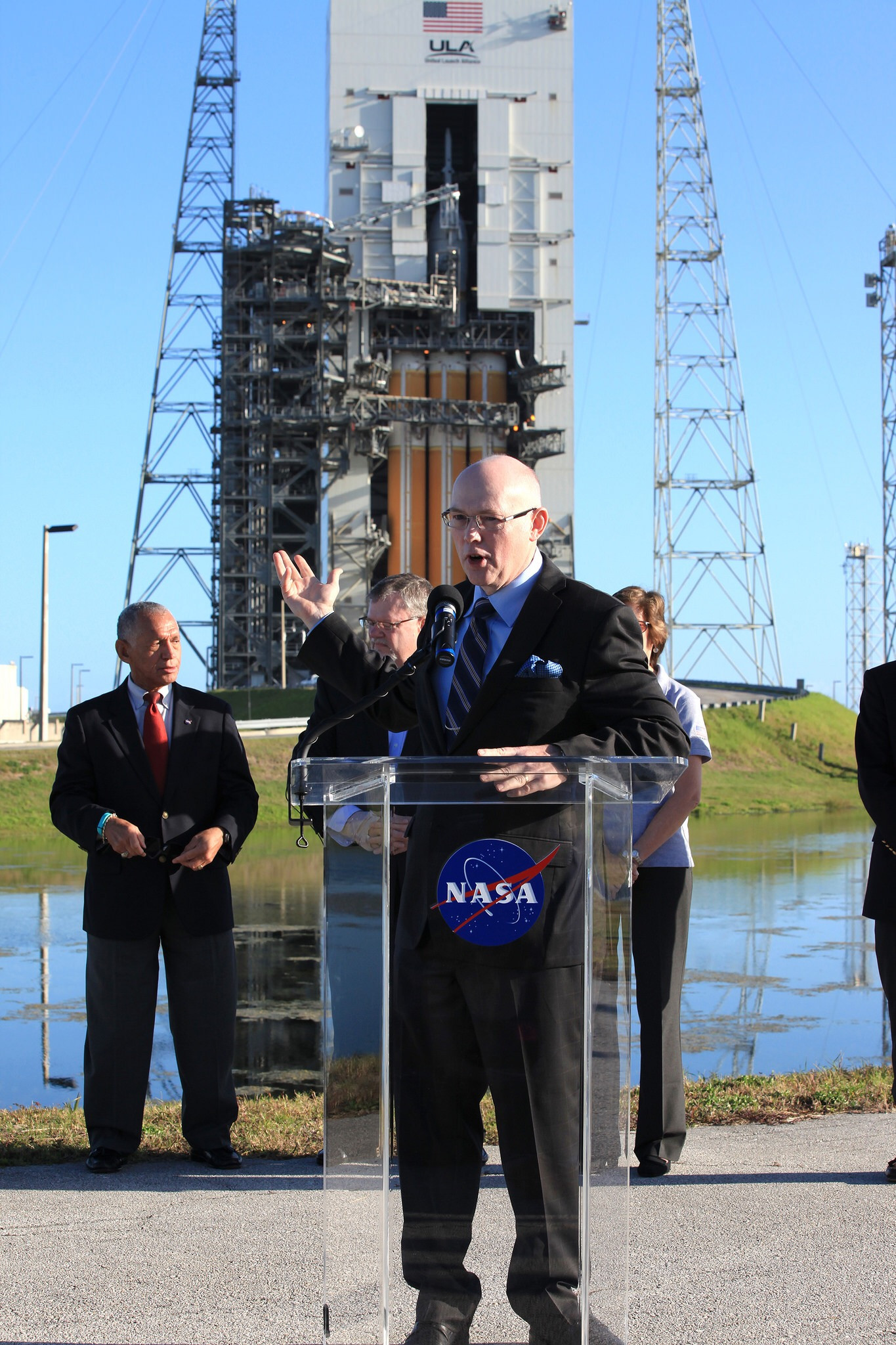
Tory Bruno leaves United Launch Alliance after nearly 12 years as President and CEO, a tenure that reshaped the company during one of the most turbulent periods in the launch industry.
When Bruno took over ULA in 2014, the company was at an inflection point. Built around the Atlas V and Delta IV families, ULA was technically dominant but facing a rapidly changing competitive landscape, rising costs, and growing political pressure to end reliance on Russian-made RD-180 engines. Bruno’s leadership was defined by navigating those challenges while preserving ULA’s reputation for reliability.
Transforming ULA for a New Era
Bruno’s most consequential achievement was leading the conception and execution of Vulcan Centaur, ULA’s next-generation launch vehicle. Vulcan was designed not just as a replacement for Atlas V and Delta IV, but as a strategic reset for the company—addressing cost competitiveness, supply chain independence, and future national security requirements.
Under his leadership, ULA:
Retired the Delta IV family, including the historic Delta IV Heavy, after completing some of the most demanding national security and science missions ever flown.
Executed the final Atlas V launches while managing engine inventories and customer commitments with precision.
Oversaw the transition to BE-4-powered Vulcan Centaur, positioning ULA for long-term relevance in the post-RD-180 era.
Maintained a near-flawless launch record during a period when the company was undergoing major organizational and technical change.
Bruno consistently emphasized mission assurance, arguing that reliability was not just a selling point but a national obligation—especially for Department of Defense, intelligence, and flagship science missions.
A CEO Who Communicated with Clarity and Passion
What set Bruno apart was not only what he built, but how he communicated.
He became one of the most visible and accessible CEOs in aerospace, regularly engaging the public, media, and industry observers directly—particularly through technical discussions that treated audiences as capable of understanding complexity rather than shielding them from it.
Bruno spoke openly about:
Engineering tradeoffs and program risks
Launch vehicle design philosophy
National security launch strategy
The cultural responsibility of launch providers
His communication style was calm, technically grounded, and deeply respectful of the workforce behind the rockets. He routinely highlighted the engineers, technicians, and operators who made ULA’s reliability possible, reinforcing a culture where execution mattered more than hype.
That authenticity earned him credibility across the industry, including from competitors, customers, and spaceflight enthusiasts alike.
ULA’s Path Forward
With Bruno’s departure, John Elbon steps in as Interim CEO, joined by Mark Peller as COO. Elbon brings decades of aerospace experience, and the immediate priority remains unchanged: successful, repeatable Vulcan launches and full certification for national security missions.
Going forward, ULA’s trajectory will hinge on:
Completing Vulcan’s operational ramp-up
Securing consistent launch cadence
Maintaining its reputation for reliability while improving cost competitiveness
Finalizing leadership succession during a critical operational phase
The foundation Bruno built—technically, culturally, and strategically—gives ULA stability during the transition. His departure marks the end of an era, but not a disruption of direction.
A Lasting Legacy
Tory Bruno leaves ULA having guided it through retirement, reinvention, and renewal. He presided over the close of legacy systems, the birth of a new launch vehicle, and the preservation of ULA’s core identity in a radically changed market.
His legacy is not just Vulcan Centaur or a launch manifest—it is a company that emerged from existential pressure still trusted with the nation’s most critical missions.
For ULA, the next chapter begins on a foundation he helped secure.