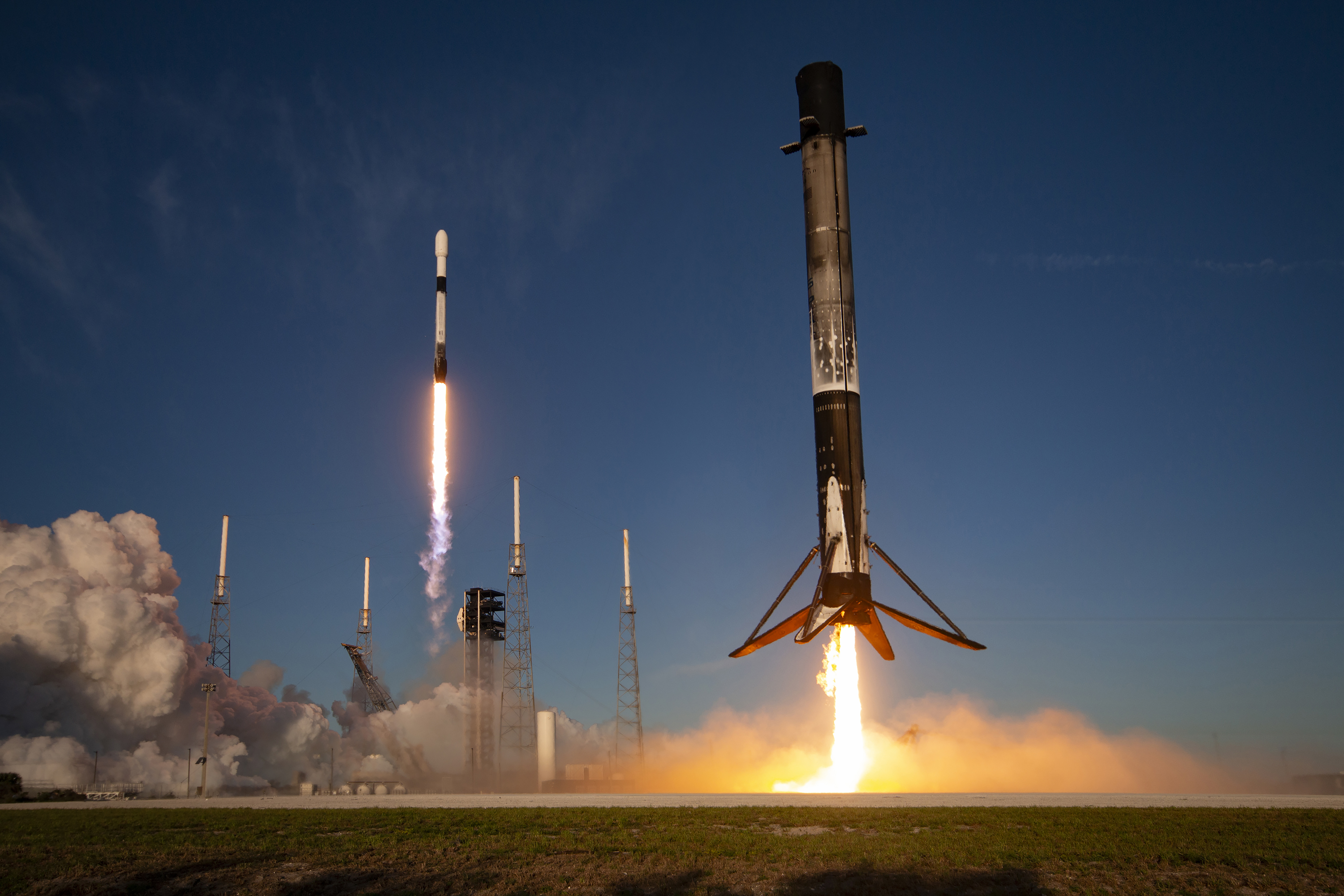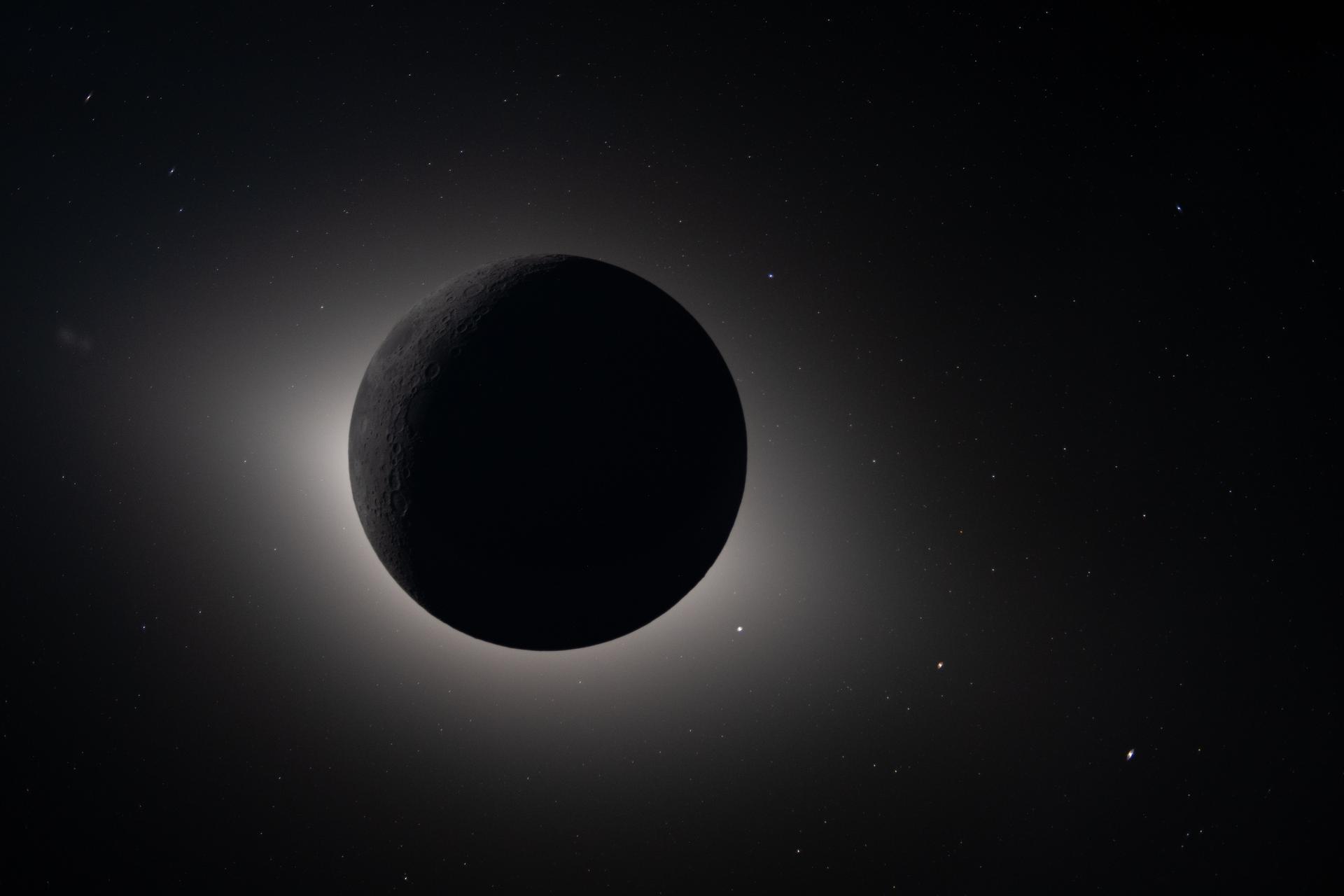

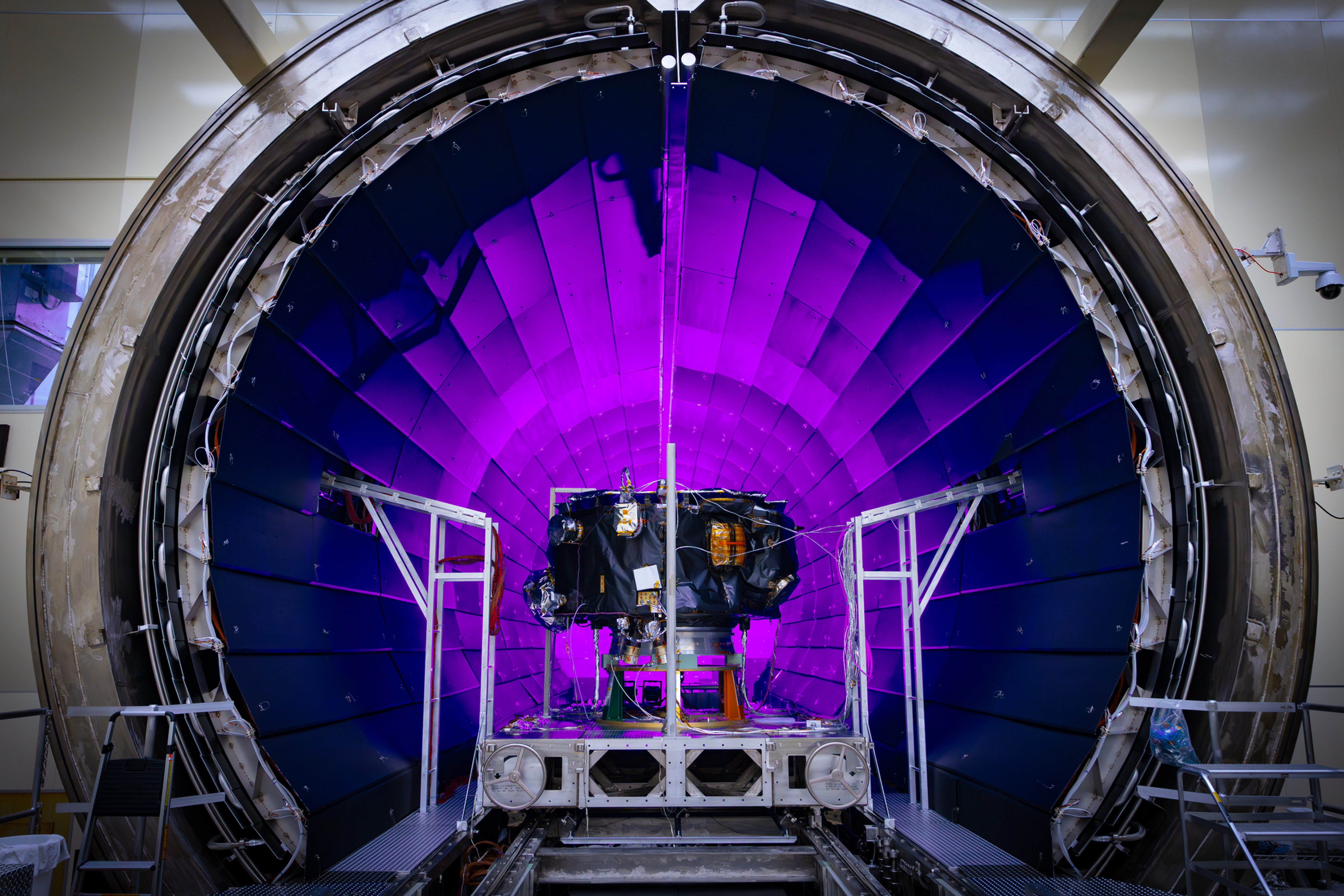
NASA’s Interstellar Mapping and Acceleration Probe (IMAP) successfully launched this morning aboard a SpaceX Falcon 9 from Launch Complex 39A at Kennedy Space Center. The spacecraft, along with its two rideshare companions — the Carruthers Geocorona Observatory and NOAA’s Space Weather Follow-On L1 (SWFO-L1) — is now on its way to the Earth–Sun Lagrange Point 1 (L1), about 1.5 million kilometers from Earth.
Launch and Vehicle Performance
The Falcon 9 lifted off at 7:30 a.m. EDT, carrying IMAP and its co-manifested payloads into an Earth–Sun transfer orbit. The first stage completed its burn and returned for landing, while the second stage placed the spacecraft stack on the correct trajectory for insertion toward L1. Deployment occurred as planned, marking the ninth NASA Launch Services Program mission to use Falcon 9.
From here, IMAP and its rideshares will conduct a series of cruise maneuvers before settling into their operational halo orbits around L1.
The IMAP Spacecraft
IMAP is a NASA Solar Terrestrial Probes mission managed by the Johns Hopkins Applied Physics Laboratory. The spacecraft weighs about 900 kilograms and carries 10 scientific instruments designed to provide the most comprehensive dataset yet on the interaction between the solar wind and the local interstellar medium.
Key instruments include:
CoDICE (Compact Dual Ion Composition Experiment): Measures solar and interstellar ions across a broad energy spectrum.
SWAPI (Solar Wind and Pickup Ions): Captures lower-energy solar wind particles and pickup ions.
IMAP-Lo and IMAP-Hi: Energetic neutral atom imagers to map the global structure of the heliosphere.
Dust Analyzer: Detects and characterizes interstellar dust grains entering the solar system.
Magnetometers: Provide magnetic field measurements to place particle data in context.
Together, these instruments will answer fundamental questions about how charged particles are accelerated in the heliosphere and how the solar system interacts with the galactic environment.
Rideshare Payloads
Carruthers Geocorona Observatory
This small satellite, named for astrophysicist George R. Carruthers, will study Earth’s geocorona — the outermost hydrogen envelope of our atmosphere. Using ultraviolet imaging, it will examine how atmospheric material escapes into space, improving understanding of planetary atmospheric loss processes.
NOAA’s SWFO-L1
SWFO-L1 is NOAA’s first dedicated space weather monitoring spacecraft. From L1, it will measure solar wind density, velocity, and interplanetary magnetic fields while also hosting a compact coronagraph for coronal mass ejection detection. The mission will provide continuous, operational space weather data to improve forecasts that protect satellites, astronauts, and terrestrial infrastructure.
Scientific Importance
The heliosphere — a bubble carved out by the solar wind as it pushes against the interstellar medium — shields Earth and the planets from much of the galaxy’s high-energy radiation. IMAP will map this boundary region in detail, investigating:
Particle acceleration mechanisms that energize solar and interstellar ions.
The structure and variability of the heliospheric boundary.
The inflow of interstellar material into the solar system.
By combining energetic neutral atom imaging, dust measurements, and in situ particle data, IMAP will provide context for missions like Parker Solar Probe and ESA’s Solar Orbiter, linking near-Sun dynamics with conditions at the edge of the heliosphere.
Broader Impact
IMAP data will improve models of how the solar system interacts with the galaxy, while SWFO-L1 provides practical, real-time monitoring of space weather. Together with Carruthers’ atmospheric studies, this mission set represents a blend of fundamental science and operational utility.
The mission is cost-capped at $492 million (excluding launch) and is designed for at least five years of operations at L1. With contributions from over 25 institutions worldwide, IMAP underscores the collaborative, international nature of modern heliophysics.