


Electron Delivers STP-S30 to Orbit in Flawless Nighttime Launch
- Ryan Bale

- Dec 18, 2025
- 2 min read



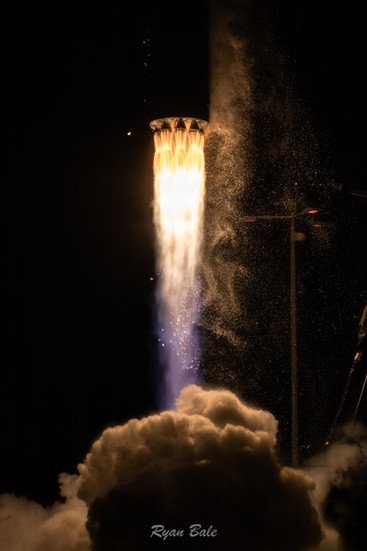


Wallops Island, Virginia — Rocket Lab has successfully launched the U.S. Space Force’s STP-S30 mission, with company founder and CEO Peter Beck confirming a 100% mission success following Electron’s ascent from Launch Complex 2 at the Mid-Atlantic Regional Spaceport at NASA’s Wallops Flight Facility.
The Electron rocket lifted off during the middle of the night, executing a clean ascent and placing its payload into the targeted low Earth orbit. All mission objectives were met, marking another flawless flight for Rocket Lab’s small-launch vehicle and reinforcing the company’s growing role in national security and experimental space missions.
A Precise and Nominal Flight
Electron performed exactly as planned from liftoff through second-stage cutoff, with the Kick Stage successfully deploying four experimental DiskSat spacecraft into their designated orbit. Shortly after payload separation, Peter Beck announced mission success, confirming that all spacecraft were healthy and operating as expected.
The flight, aptly named “Don’t Be Such A Square,” represented Rocket Lab’s 20th Electron launch of the year, highlighting the company’s ability to sustain a high launch cadence while maintaining reliability.
Advancing DiskSat Spacecraft Concepts
The STP-S30 mission centers on the deployment of four DiskSats, an unconventional satellite architecture developed by The Aerospace Corporation in partnership with U.S. government research programs. Unlike traditional CubeSats or rectangular small satellites, DiskSats utilize a flat, circular form factor intended to explore new methods of power generation, maneuverability, and orbit control.
Now on orbit at approximately 550 kilometers, the DiskSats will begin a series of technology demonstrations, including:
Testing attitude control and maneuverability
Evaluating electric propulsion systems
Demonstrating a new satellite deployment mechanism
Collecting data on spacecraft performance in low Earth orbit
The mission’s results are expected to inform future spacecraft designs aimed at increasing resilience, responsiveness, and operational flexibility.
A Win for Responsive Space Access
STP-S30 underscores the increasing reliance of the U.S. Space Force on commercial launch providers for rapid, precise access to orbit. Rocket Lab’s ability to accelerate the mission’s timeline and deliver a fully successful launch highlights the maturity of Electron as a trusted platform for experimental and defense-related missions.
For Rocket Lab, the success further cements Electron’s reputation as one of the world’s most reliable small orbital launch vehicles, capable of supporting missions that demand schedule certainty and exact orbital insertion.

Looking Ahead
With STP-S30 successfully on orbit, Rocket Lab continues to build momentum as it balances a busy Electron manifest with development of its larger Neutron rocket, aimed at expanding the company’s capabilities into medium-lift and constellation missions.
As small satellite architectures evolve and government space strategies emphasize agility and resilience, missions like STP-S30 demonstrate how commercial launch providers are shaping the future of access to space, one successful launch at a time.
Comments