
Coverage
News
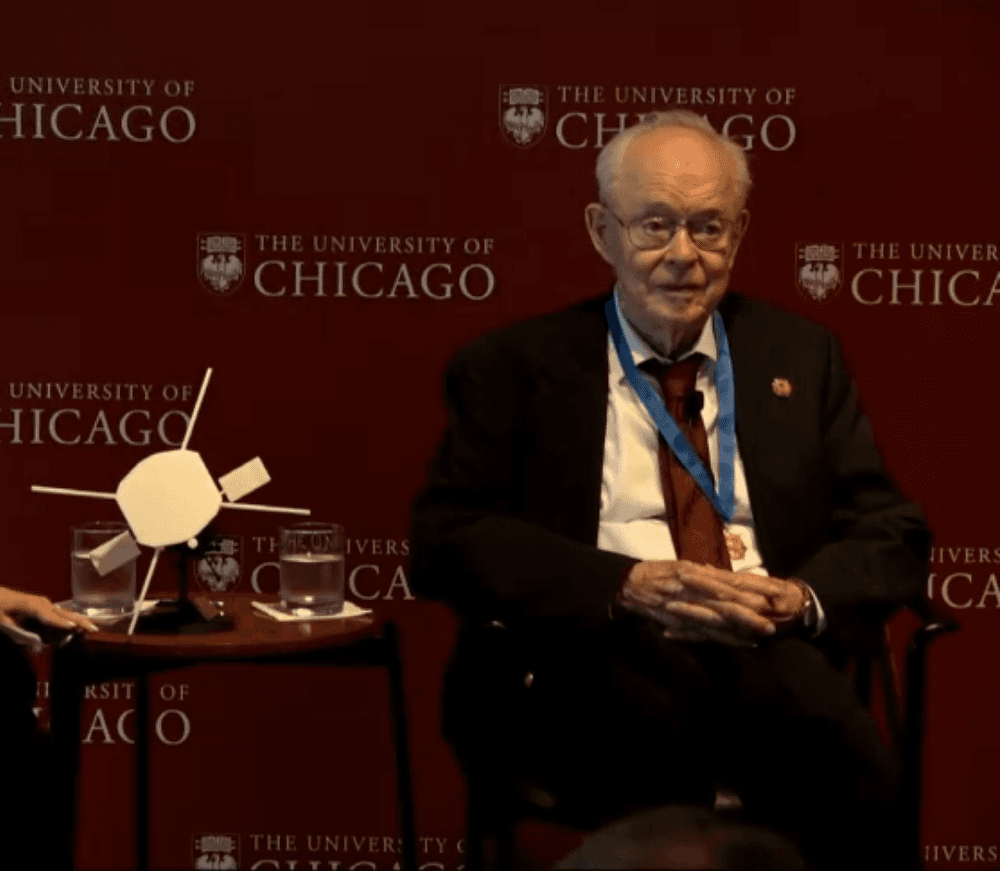
Meet Eugene Parker, the discoverer of Solar Wind
Eugene Parker was born on June 10th, 1927 in Houghton, Michigan and is currently 91 years old. Parker received his Bachelors in Science Degree from Michigan State University in 1948 and then later received his Ph.D. from Caltech in 1951. In the mid-1950s, he developed a theory on Solar Wind that moved through space at supersonic speeds and predicted the Parker Spiral shape of the Sun's magnetic field in the outer solar system. His theory was rejected by the Astrophysical Journal, but the editor
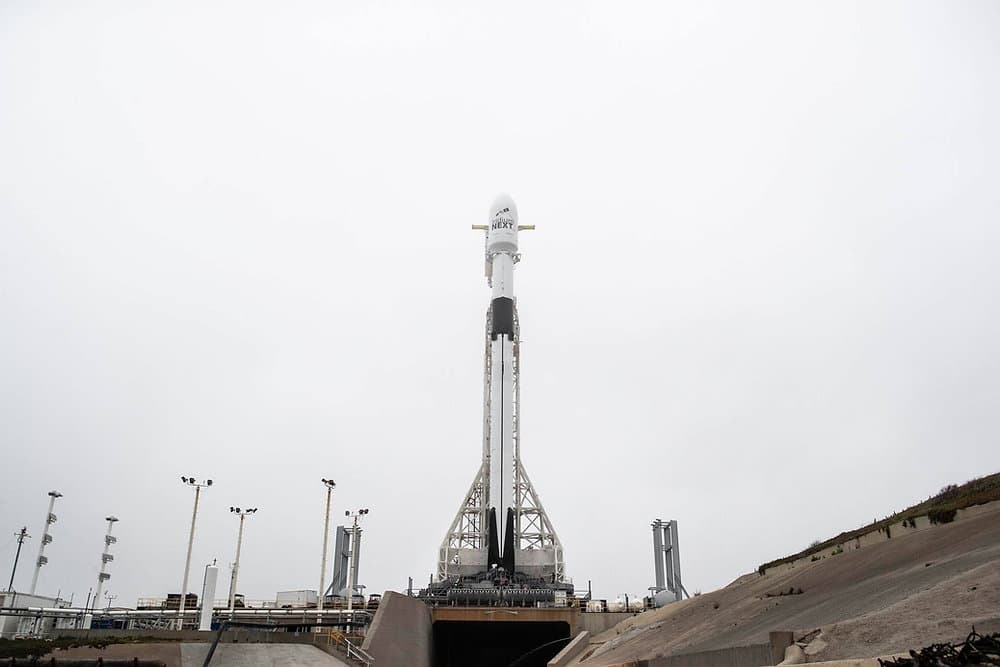
The 7th batch of Iridium satellites will launch tomorrow morning
Tomorrow morning SpaceX will be launching another batch of iridium satellites on their 7th mission. This is the first launch of the new Block 5 variant of the Falcon 9 from the west coast. The Iridum-7 launch will be taking place out of California's Vandenberg Air Force Base and will be delivered into a polar orbit around Earth at 7:39am EDT. With this mission, the first stage will be landing on the droneship "Just Read The Instructions" (JRTI) positioned out in the Pacific Ocean. The first st
The 7th batch of Iridium satellites will launch tomorrow morning
Tomorrow morning SpaceX will be launching another batch of iridium satellites on their 7th mission. This is the first launch of the new Block 5 variant of the Falcon 9 from the west coast. The Iridum-7 launch will be taking place out of California's Vandenberg Air Force Base and will be delivered into a polar orbit around Earth at 7:39am EDT. With this mission, the first stage will be landing on the droneship "Just Read The Instructions" (JRTI) positioned out in the Pacific Ocean. The first st
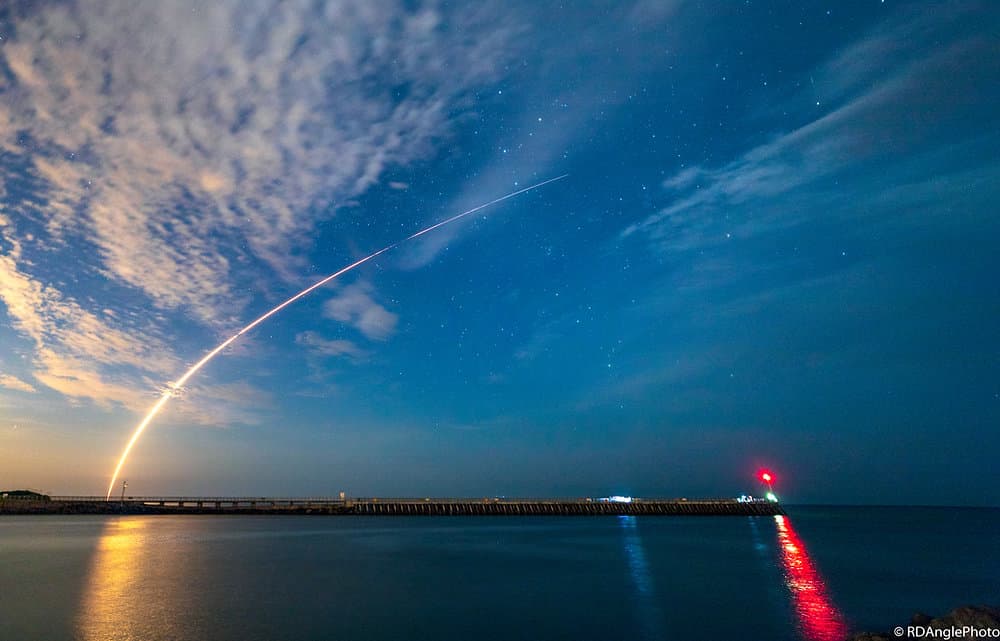
The Falcon 9 soars through the Florida night sky carrying Telstar 19v
SpaceX's Falcon 9 rocket launched into Florida's night sky at 1:50am EDT with Telstar 19v inside the payload fairing. The Falcon 9 ascended into the sky as an orb of light at the newly upgraded rocket takes flight. This is the second time the new Block 5 version of the Falcon 9 has launches and is the first time from Space launch Complex 40 (SLC-40). The first stage separated and began to prepare for its landing as the second stage powered its way into orbit. The first stage came down and succe
The Falcon 9 soars through the Florida night sky carrying Telstar 19v
SpaceX's Falcon 9 rocket launched into Florida's night sky at 1:50am EDT with Telstar 19v inside the payload fairing. The Falcon 9 ascended into the sky as an orb of light at the newly upgraded rocket takes flight. This is the second time the new Block 5 version of the Falcon 9 has launches and is the first time from Space launch Complex 40 (SLC-40). The first stage separated and began to prepare for its landing as the second stage powered its way into orbit. The first stage came down and succe
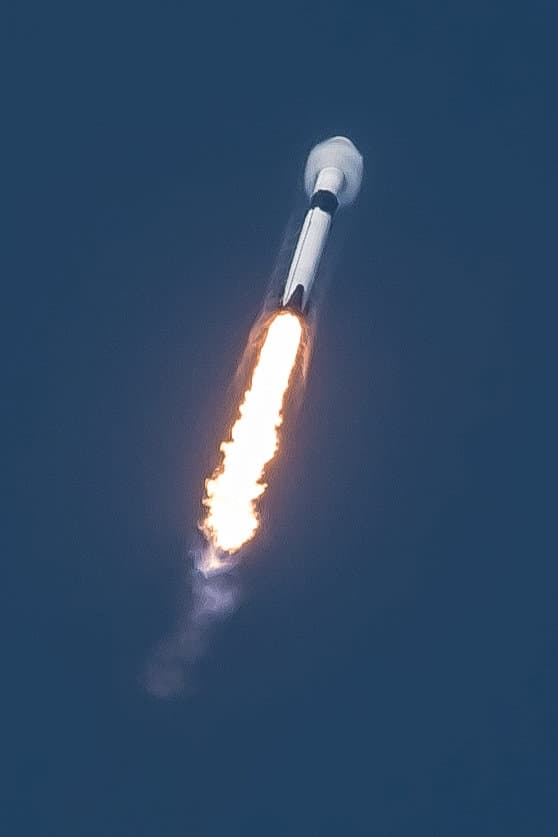
SpaceX will be launching its heaviest payload yet with their Falcon 9 rocket
Tonight at 1:50am EDT, SpaceX's Falcon 9 rocket will liftoff from Space Launch Complex 40 in Florida to a Geostationary Transfer Orbit. This is the second launch of their new Block 5 rocket carrying the Telstar 19 Vantage satellite, which weighs at 7,075kg, making it the heaviest payload launched by the Falcon 9. After stage separation, the first stage will perform a landing on the droneship "Of Course I Still Love You", which is positioned in the Atlantic Ocean. A backup launch window in case
SpaceX will be launching its heaviest payload yet with their Falcon 9 rocket
Tonight at 1:50am EDT, SpaceX's Falcon 9 rocket will liftoff from Space Launch Complex 40 in Florida to a Geostationary Transfer Orbit. This is the second launch of their new Block 5 rocket carrying the Telstar 19 Vantage satellite, which weighs at 7,075kg, making it the heaviest payload launched by the Falcon 9. After stage separation, the first stage will perform a landing on the droneship "Of Course I Still Love You", which is positioned in the Atlantic Ocean. A backup launch window in case
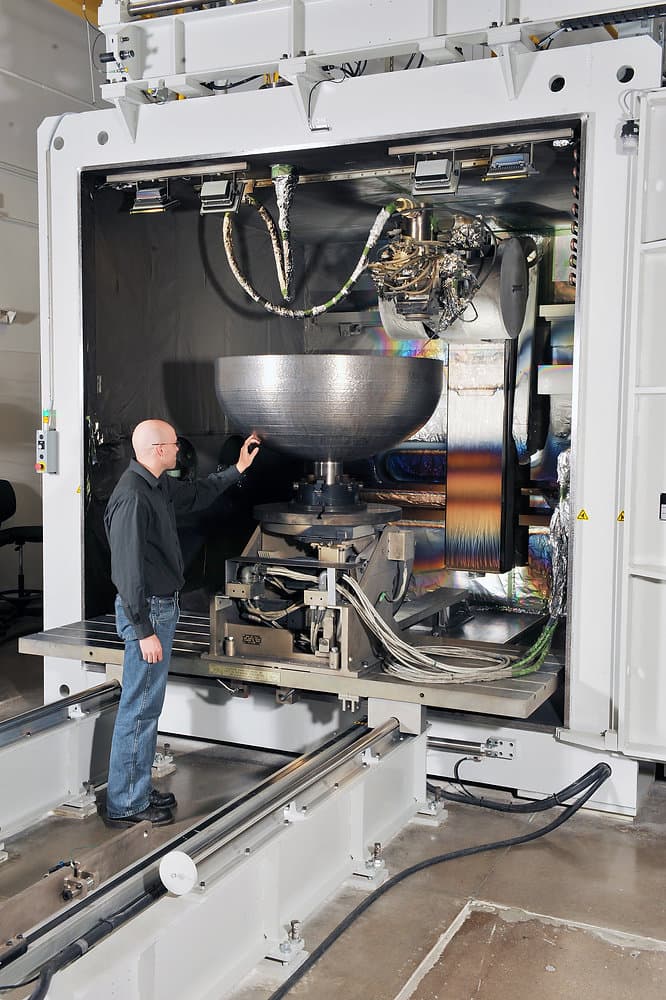
Lockheed Martin reduces satellite production time with 3-D printing processes
Lockheed Martin set a new record for 3-D Printed space hardware by printing a giant satellite tank out of titanium. The 46-inch diameter tank consists of three parts welded together and completed the final rounds of quality testing this month. "Our largest 3-D printed parts to date show we're committed to a future where we produce satellites twice as fast and at half the cost," said Lockheed's executive vice president, Rick Ambrose. They've cut the delivery time of satellite fuel tanks from two
Lockheed Martin reduces satellite production time with 3-D printing processes
Lockheed Martin set a new record for 3-D Printed space hardware by printing a giant satellite tank out of titanium. The 46-inch diameter tank consists of three parts welded together and completed the final rounds of quality testing this month. "Our largest 3-D printed parts to date show we're committed to a future where we produce satellites twice as fast and at half the cost," said Lockheed's executive vice president, Rick Ambrose. They've cut the delivery time of satellite fuel tanks from two
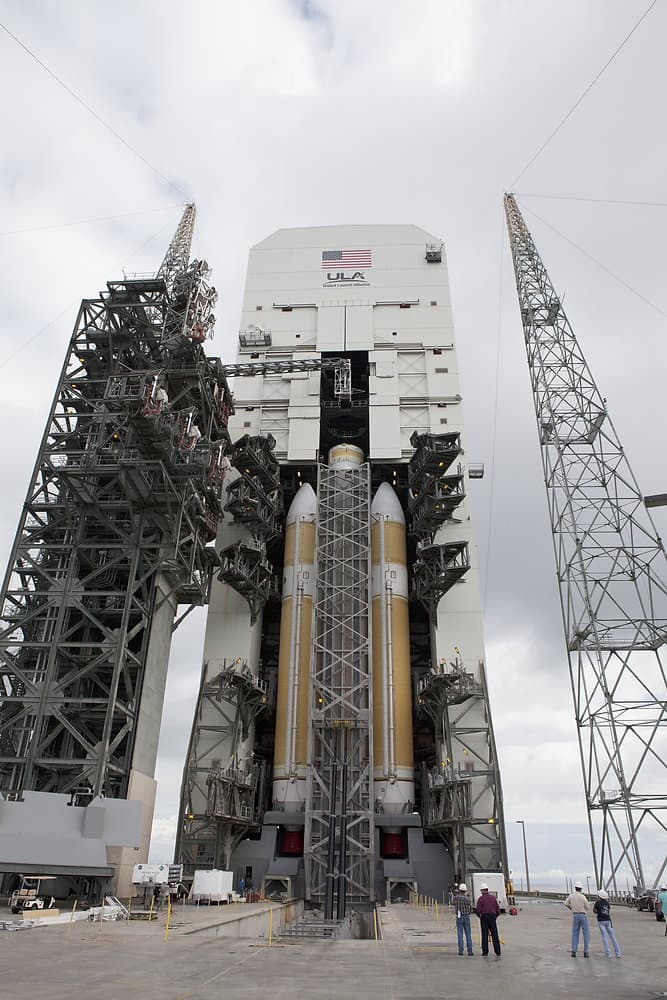
Delta IV Heavy performing launch sequence tests for the upcoming launch of NASA's Parker Solar P
United Launch Alliances's Delta IV Heavy rocket has been undergoing several rounds of testing to get the vehicle ready for launch No Earlier Than August 4th, 2018 from Launch Complex 37. The Wet Dress Rehearsals (WDR) started on July 2nd, where they focused on fueling the three first stage boosters. A second successful WDR was performed a few days later on July 6th, where they fueled the entire rocket and simulated a liftoff sequence. These tests help ensure that the rocket, ground systems, and
Delta IV Heavy performing launch sequence tests for the upcoming launch of NASA's Parker Solar P
United Launch Alliances's Delta IV Heavy rocket has been undergoing several rounds of testing to get the vehicle ready for launch No Earlier Than August 4th, 2018 from Launch Complex 37. The Wet Dress Rehearsals (WDR) started on July 2nd, where they focused on fueling the three first stage boosters. A second successful WDR was performed a few days later on July 6th, where they fueled the entire rocket and simulated a liftoff sequence. These tests help ensure that the rocket, ground systems, and