
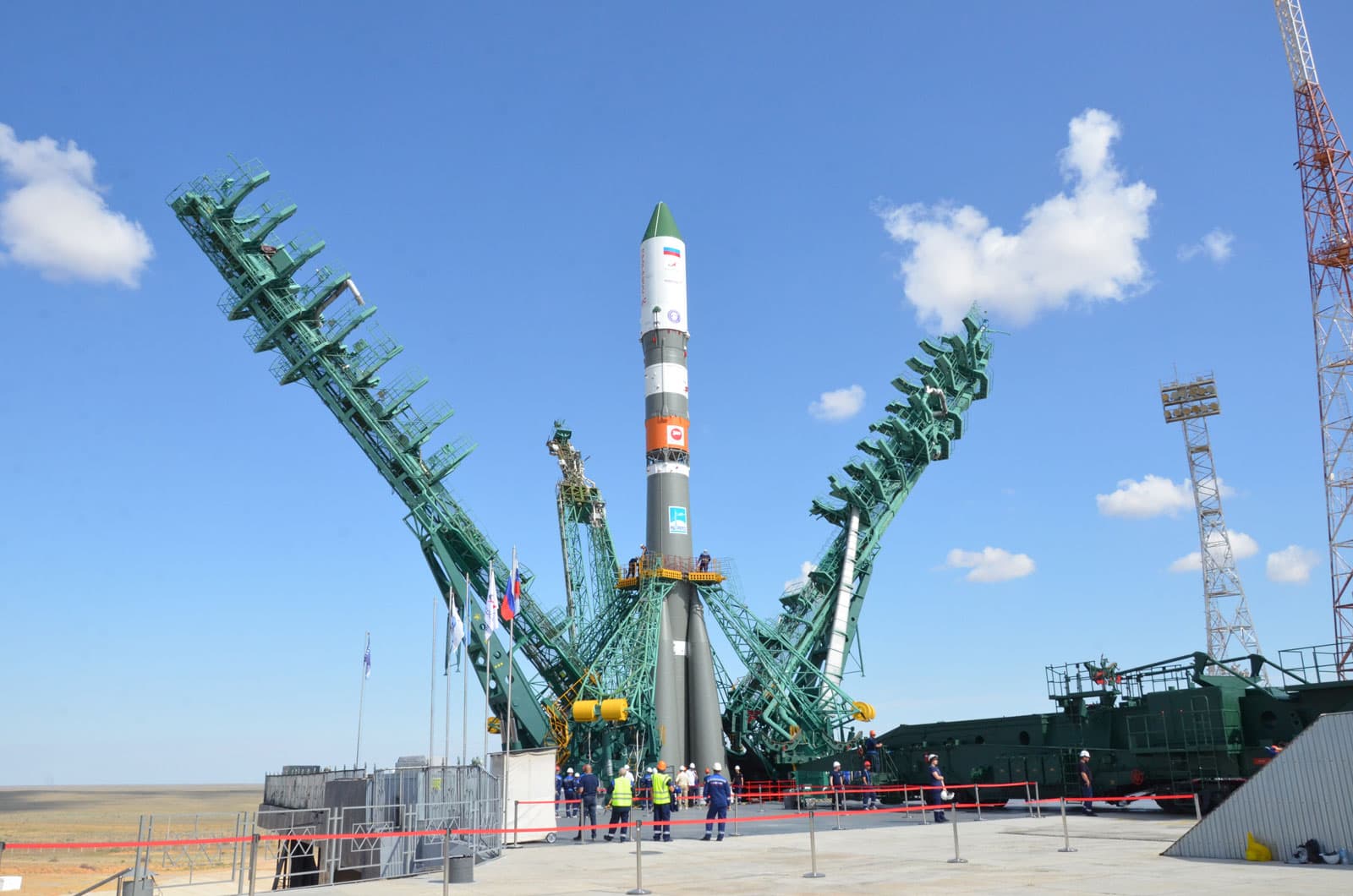
Soyuz 2.1a | Progress MS-34 (95P)
Progress resupply mission to the International Space Station.
Launch Vehicle
Soyuz-2
Soyuz is one of history's most prolific and reliable rocket families, with roots in the Soviet R-7 ICBM of the 1950s. The modernised Soyuz-2 series features a fully digital flight control system and upgraded engines compared to earlier variants. With over 1,900 launches across all Soyuz variants, it holds the record for most flights of any orbital rocket family. Its simple, proven design and affordable operating cost keep it competitive.
46.3 m (152 ft)
10.3 m (34 ft) across boosters
7,020 kg (Soyuz-2.1b)
3
November 28, 1966 (Soyuz lineage); October 8, 2004 (Soyuz-2.1a)
Engines
4× RD-107A (four strap-on boosters), 1× RD-108A (core), 1× RD-0124 (Fregat/Block I upper stage)
Propellant
RP-1 (kerosene) / Liquid Oxygen
Reusable
ExpendableNotable
- Over 1,900 launches across all Soyuz variants — more than any other rocket family
- Sole crewed transportation to the ISS between Shuttle retirement (2011) and Crew Dragon debut (2020)
- Design lineage traces directly to Sergei Korolev's R-7, the world's first ICBM
- Soyuz spacecraft remain the emergency return vehicle for ISS crews
T-Minus
Instantaneous
This mission has a zero-second launch window. The rocket must lift off at the exact planned second — if it misses for any reason, the launch is scrubbed and rescheduled. Instantaneous windows are typical for missions that must match a precise orbital plane (e.g. ISS rendezvous) or hit a narrow interplanetary trajectory.
16 days out
Weather forecasts beyond 4 days are too unreliable for launch planning. Check back closer to launch time.
No livestream link available yet
31/6, Baikonur Cosmodrome, Republic of Kazakhstan
Launch data via TheSpaceDevs Launch Library. Weather estimates via Open-Meteo using vehicle-specific commit criteria. Always verify with the launch provider.